Furniture
MARGINAL MAN
2017
Art Furniture / Partition
Marker on acrylic
71” x 67” x 24”
Category
Medium
Dimensions
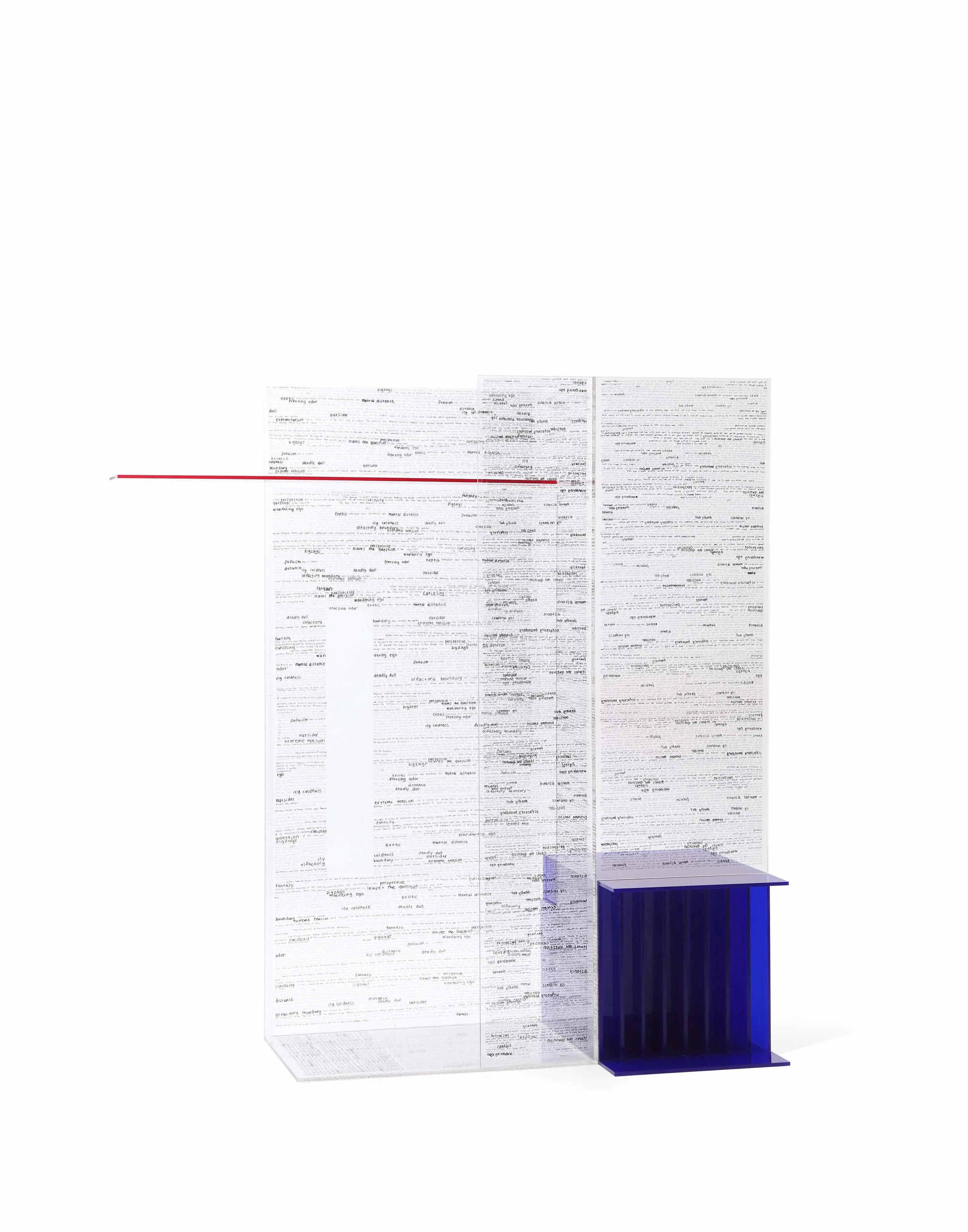
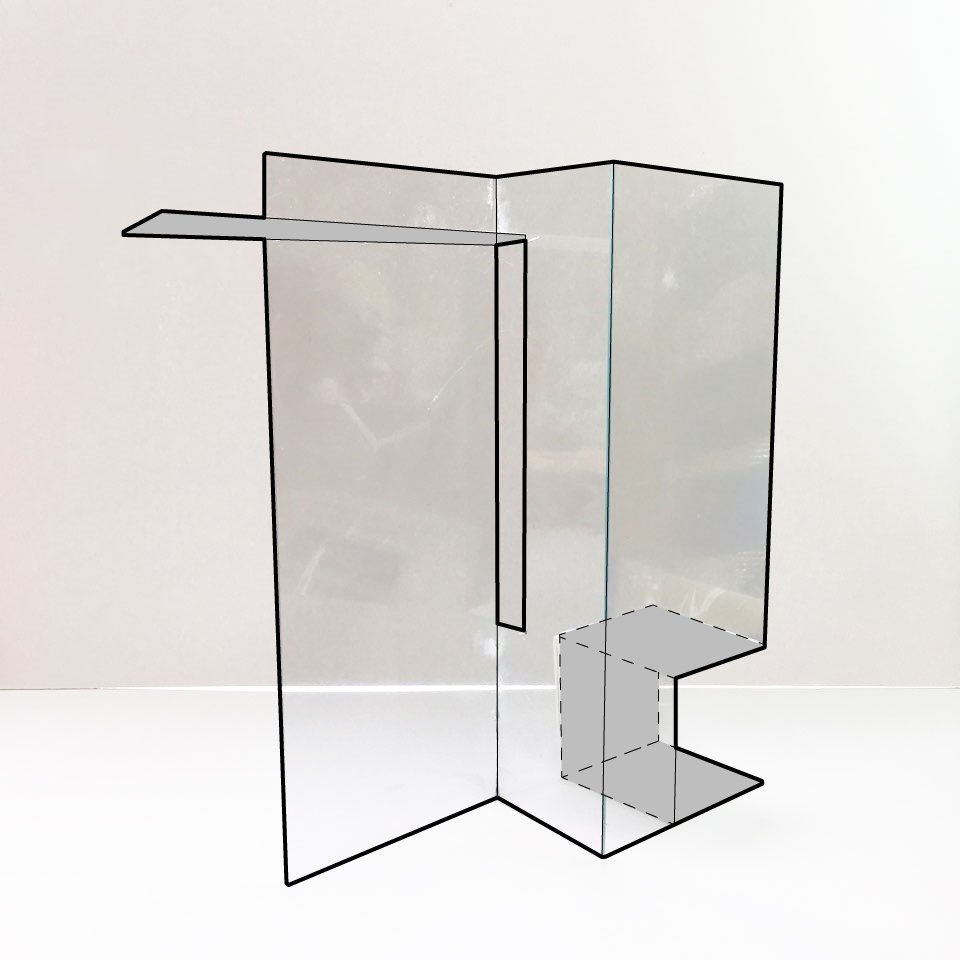
Materializing identity as a spatial threshold, the piece challenges fixed categories through layering. The partition operates not as a divider but as an atmospheric field—oscillating between clarity and opacity to reflect the fluidity of the bicultural experience.
Where the Boundaries Blur
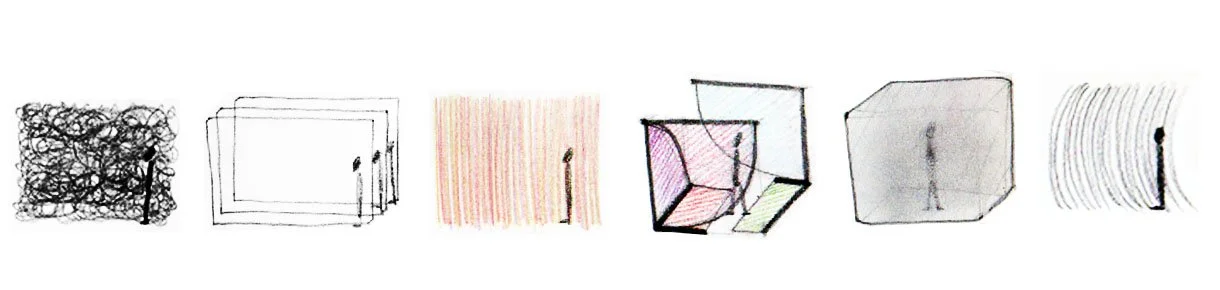
Occupying the threshold, the partition acts not as a barrier but as a mediated environment—a condition to pass through, pause beside, and read.
Grounded in the bicultural experience of navigating Korea and the United States, the work posits identity as a shifting boundary.
Constructed from layered acrylic, it operates simultaneously at the scale of the body and the room.
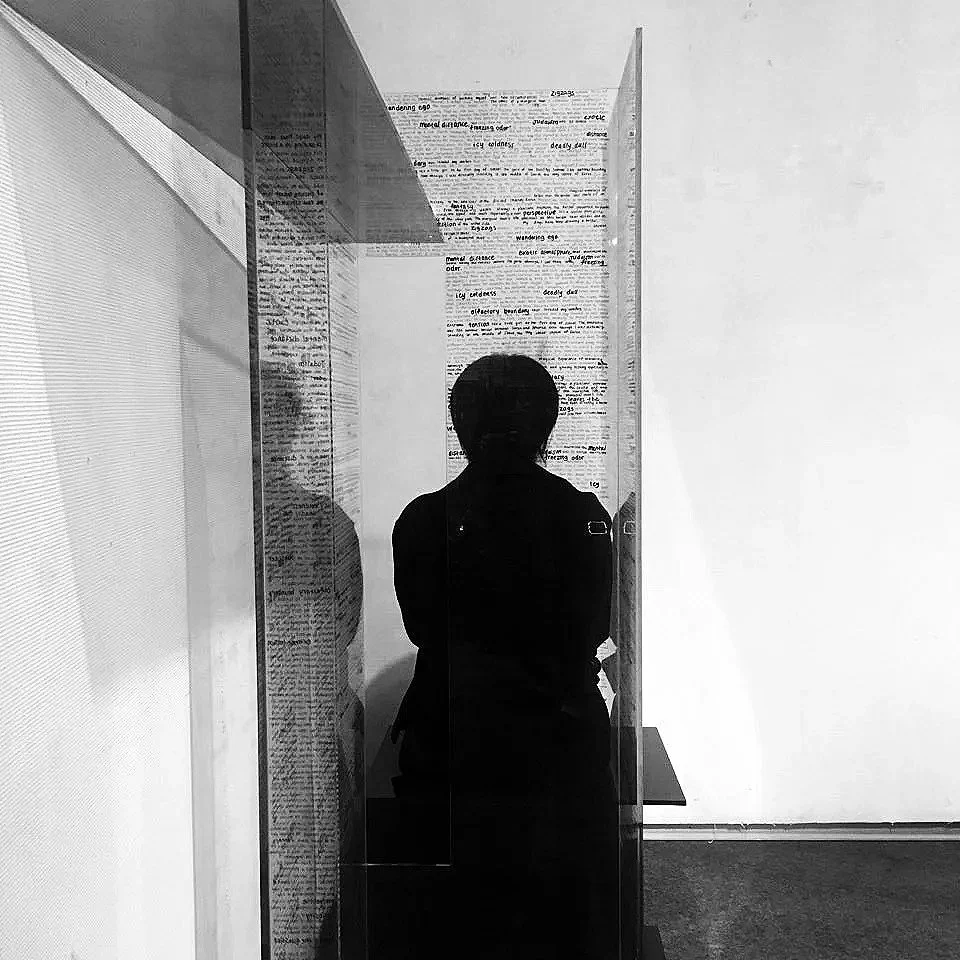
As the viewer moves, clarity and opacity trade places, transforming the boundary from a fixed line into an atmospheric field shaped by proximity.
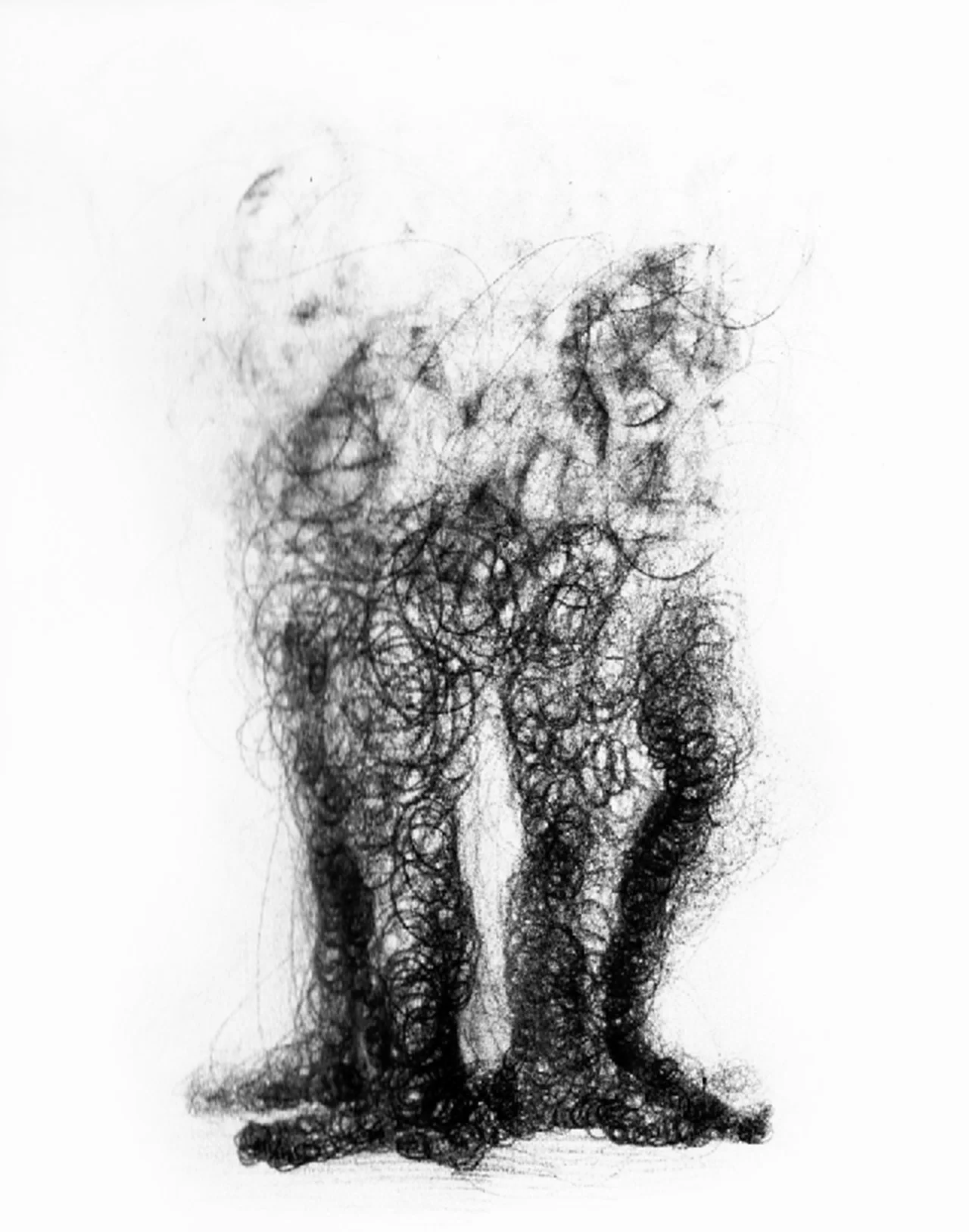
↑ Marginal Man (2017), Pencil on paper
A body is never fully clear—held in accumulating scribbles. The figure flickers between presence and erasure, as the boundary shifts through density and opacity.

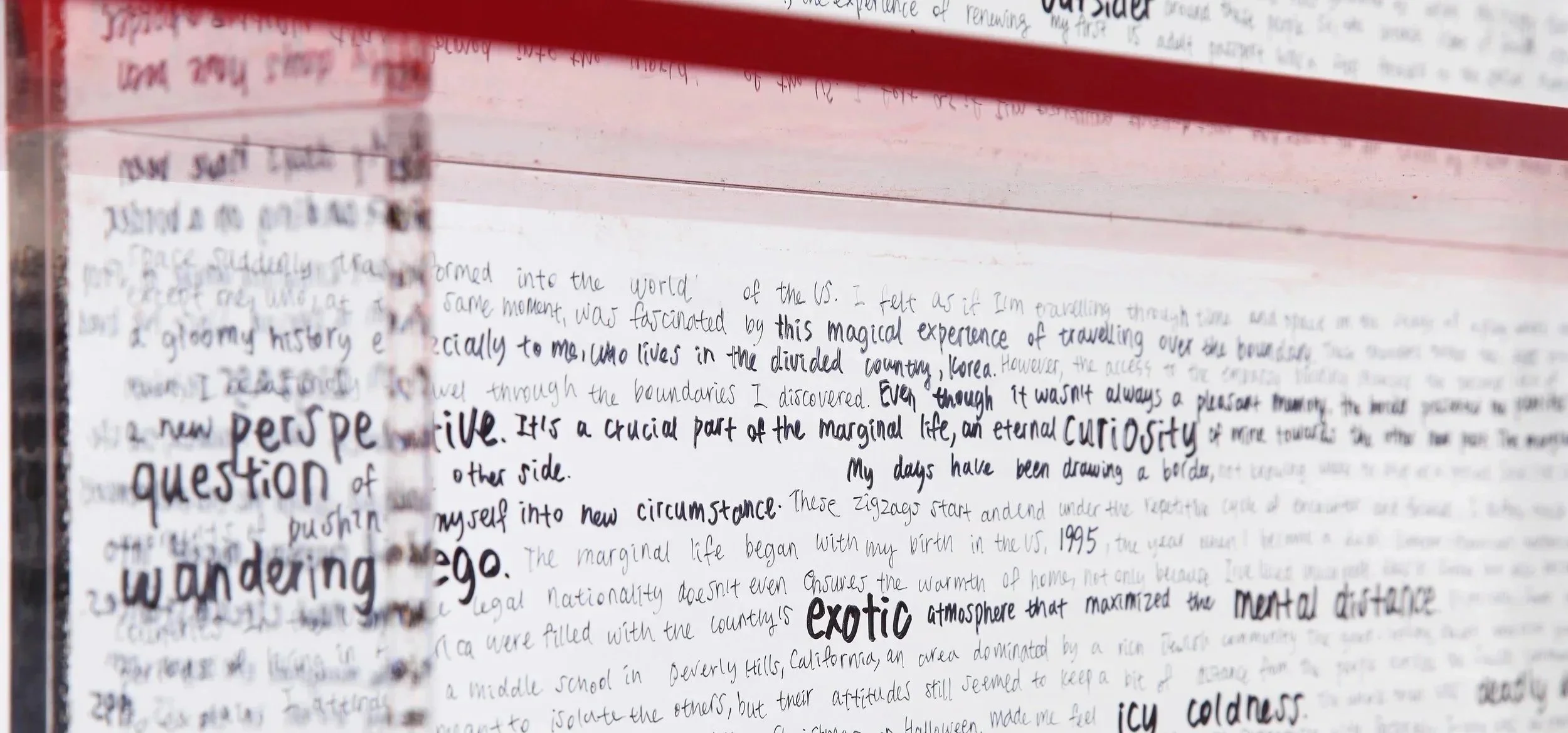
“My days have been spent drawing borders—never knowing where the line should end. Even when it wasn’t always kind to me, the border kept giving me new ways to see: new senses, new space, new perspective.”
↑ Excerpt from personal essay (2017)
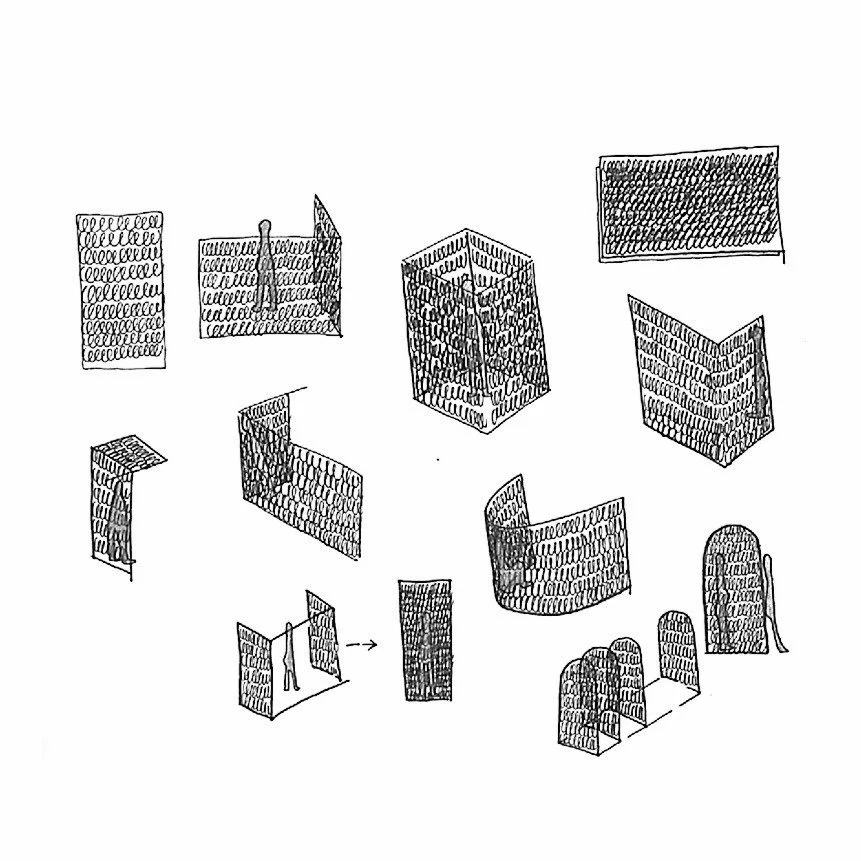
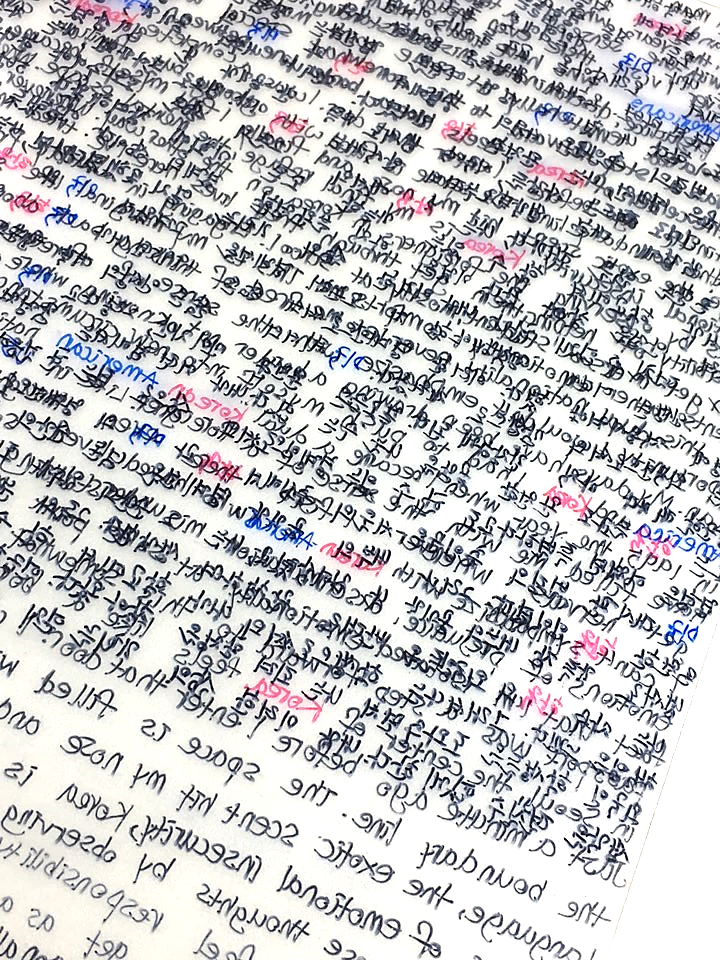
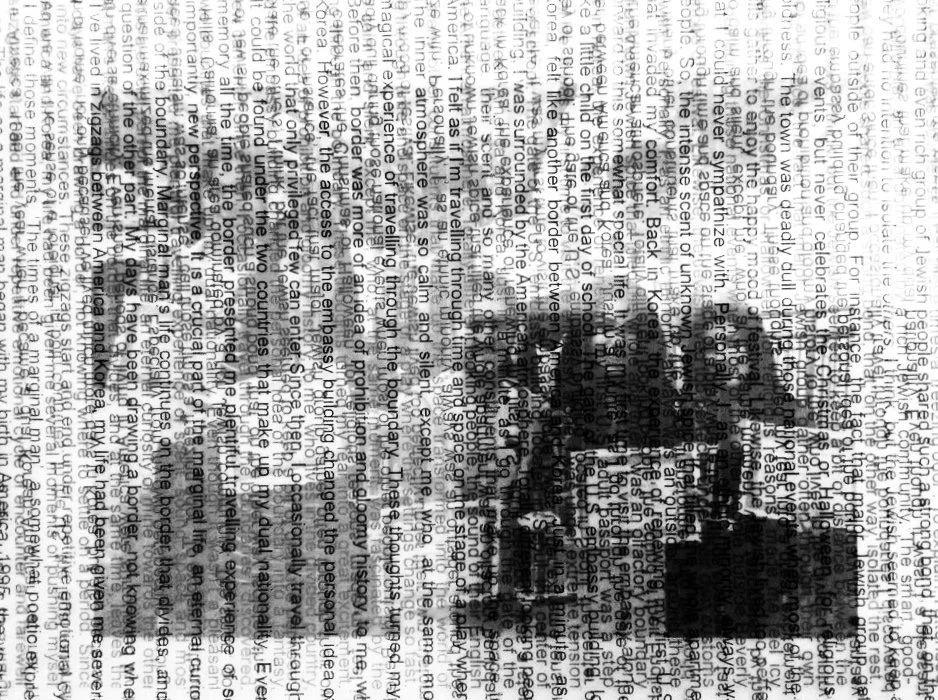
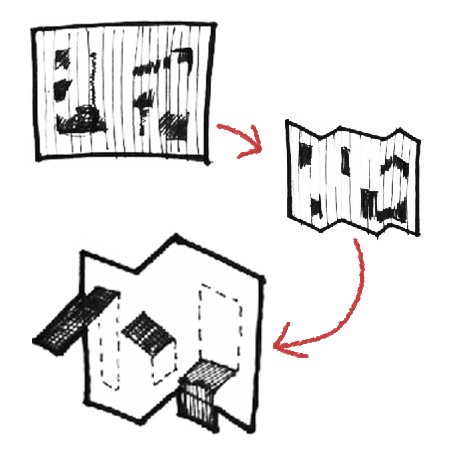
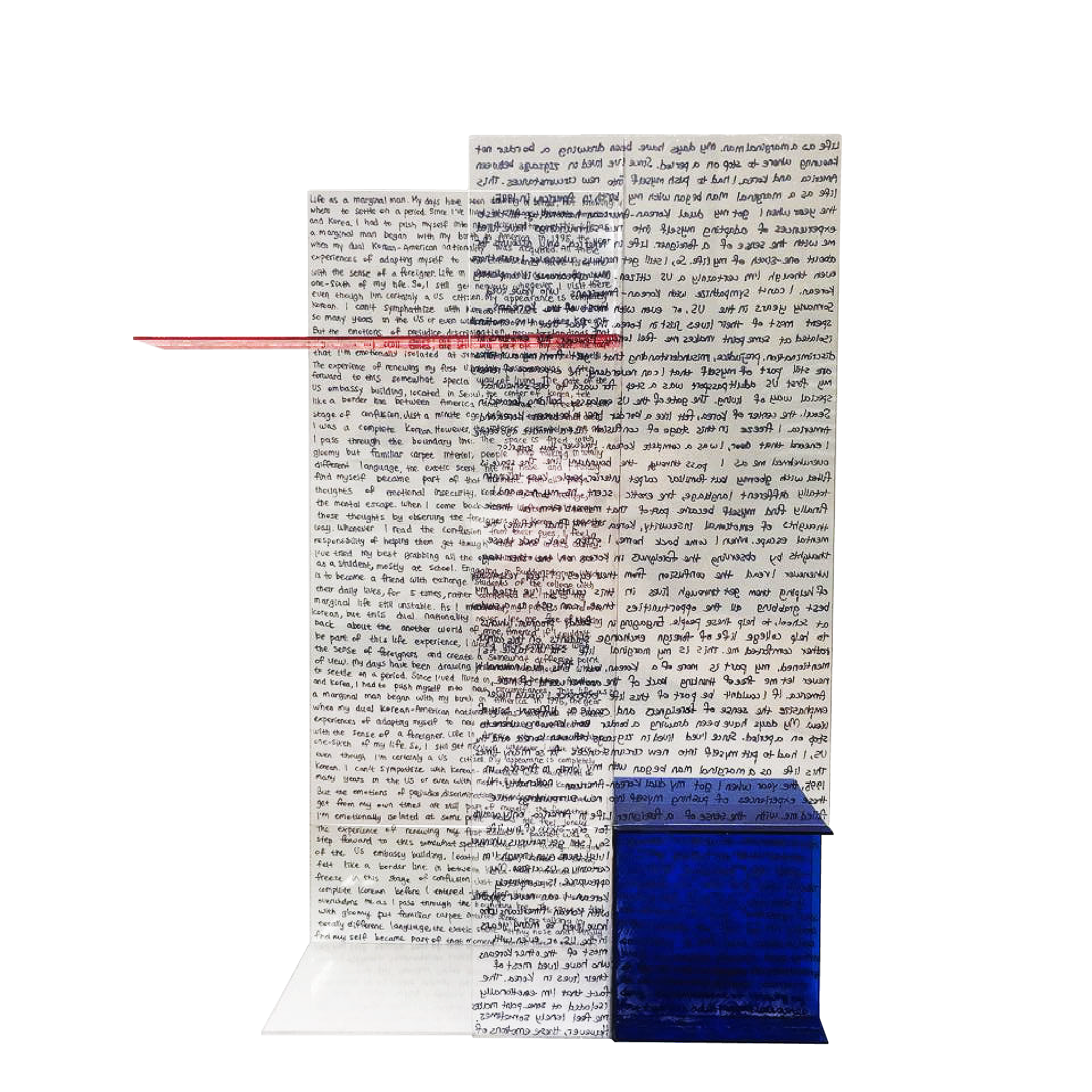
Inscribed with fragments of personal essays, the overlapping panels manipulate legibility—sharpening, blurring, or erasing text depending on the vantage point.
Color serves as a quiet index of duality, with red and blue registering separation and coexistence without hierarchy.
Anchored by an integrated seat, the layered field produces "thin architecture"—a furniture object that behaves with the spatial gravity of a room.
Materiality and Structure