Interior Architecture
Adaptive Reuse
RISING FROM WATER
2019
Woonsocket, RI
Eco-Crematorium
43,000 SF
Location
Building Type
Building Area
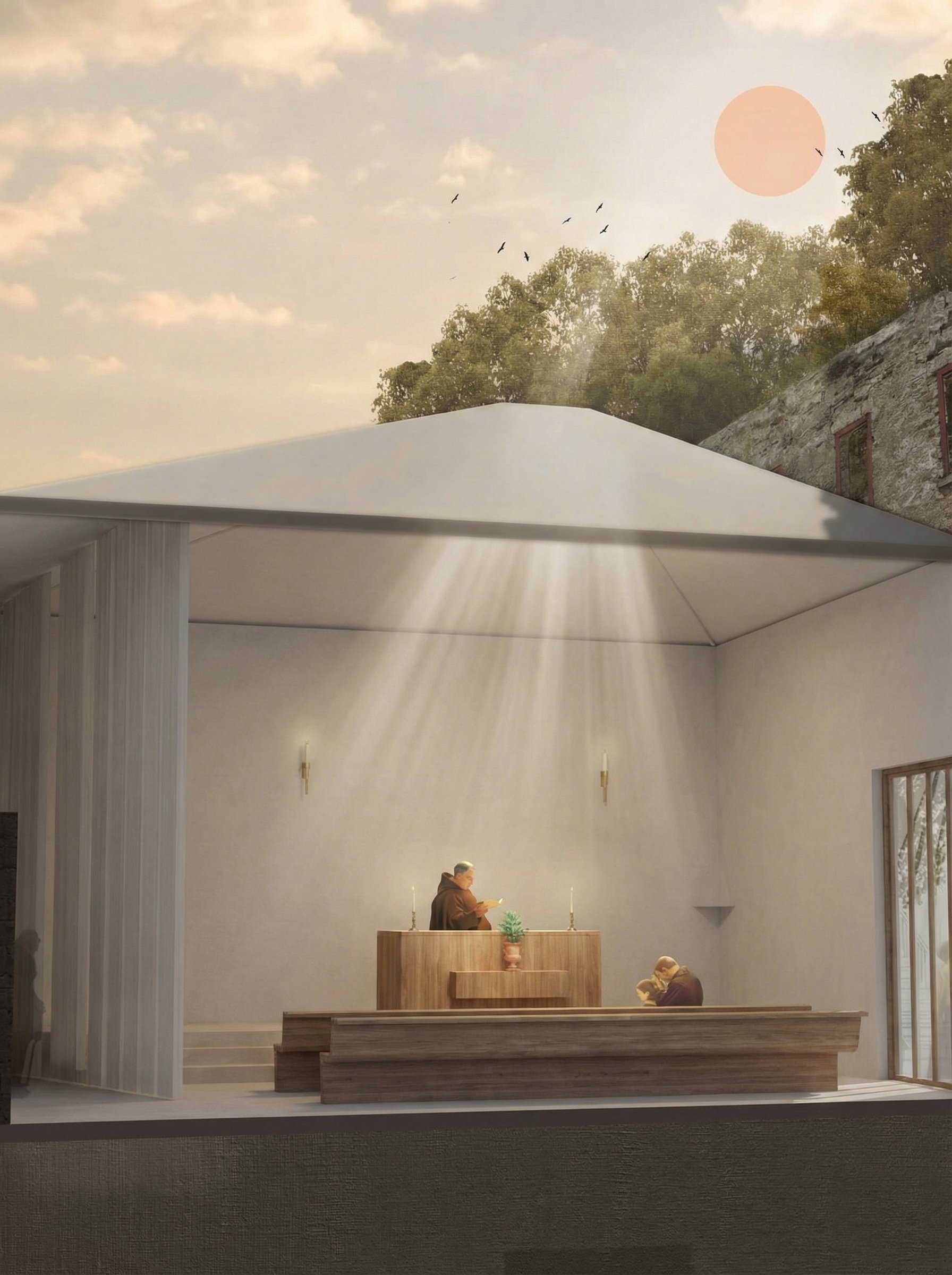
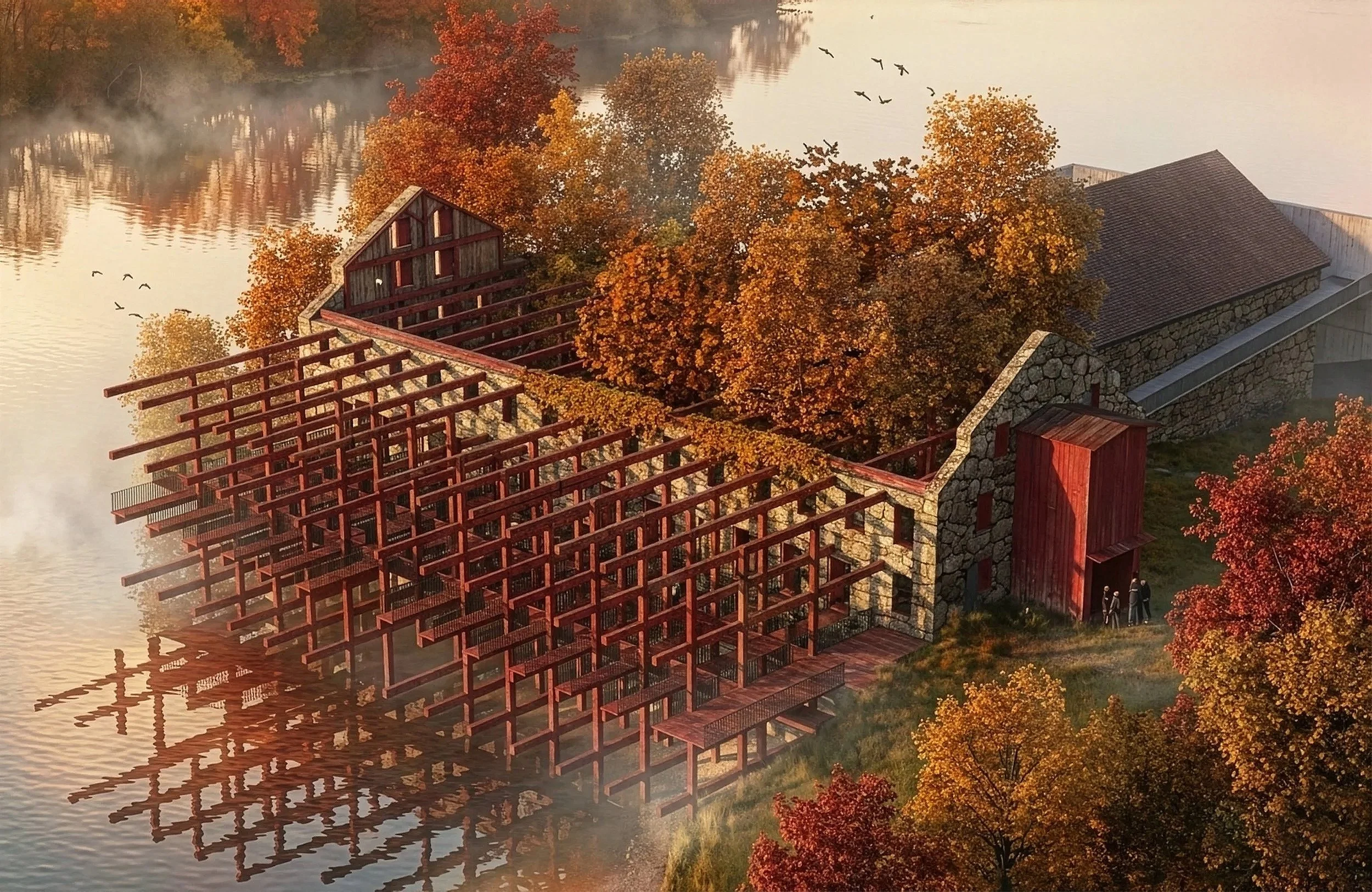
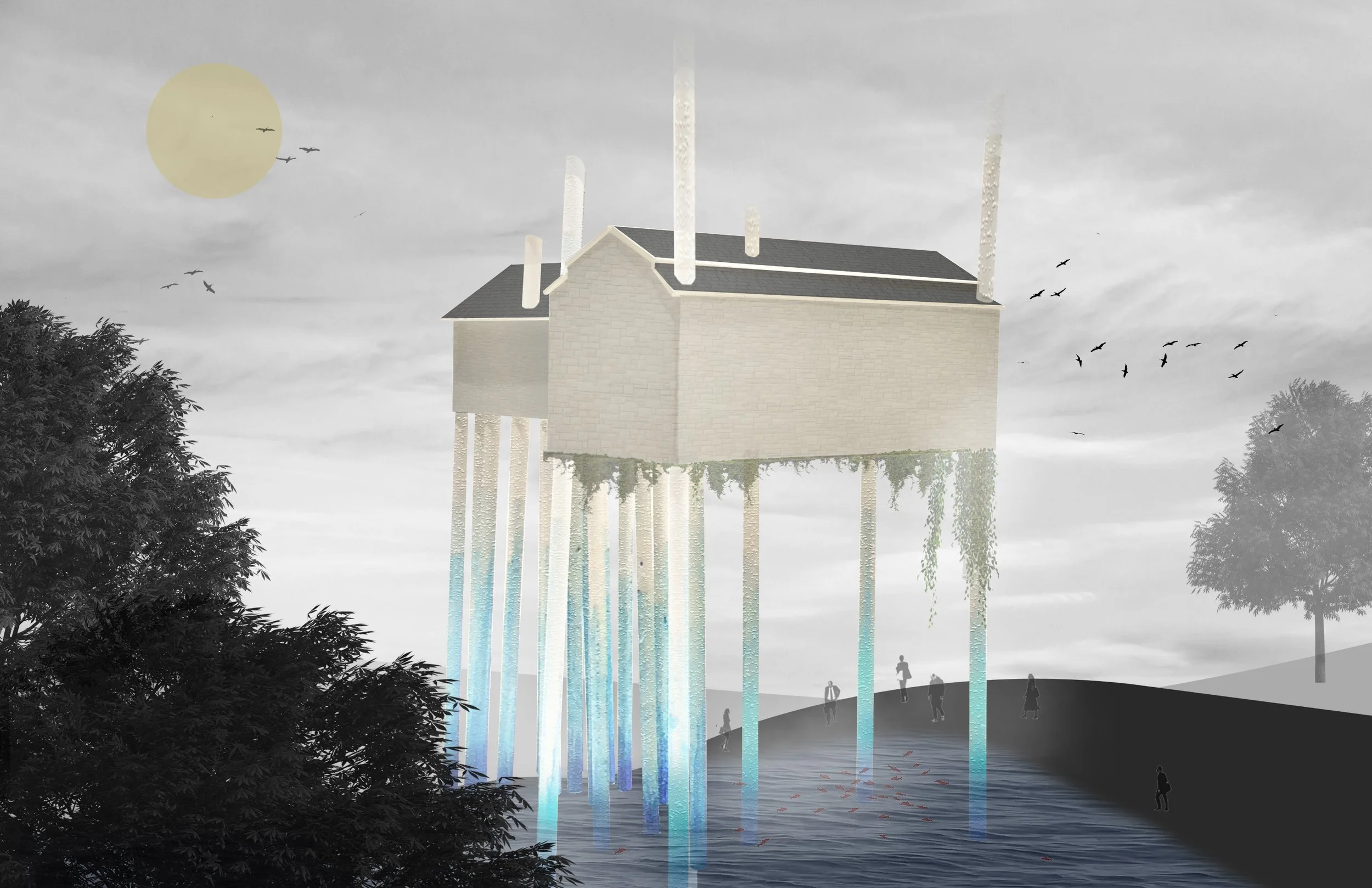
Reimagining a flood-prone mill as an eco-crematorium, the design establishes "soft infrastructure" that embraces rather than resists water. The architecture choreographs a coexistence between ecological adaptation and the collective ritual of mourning.
A Living Barrier
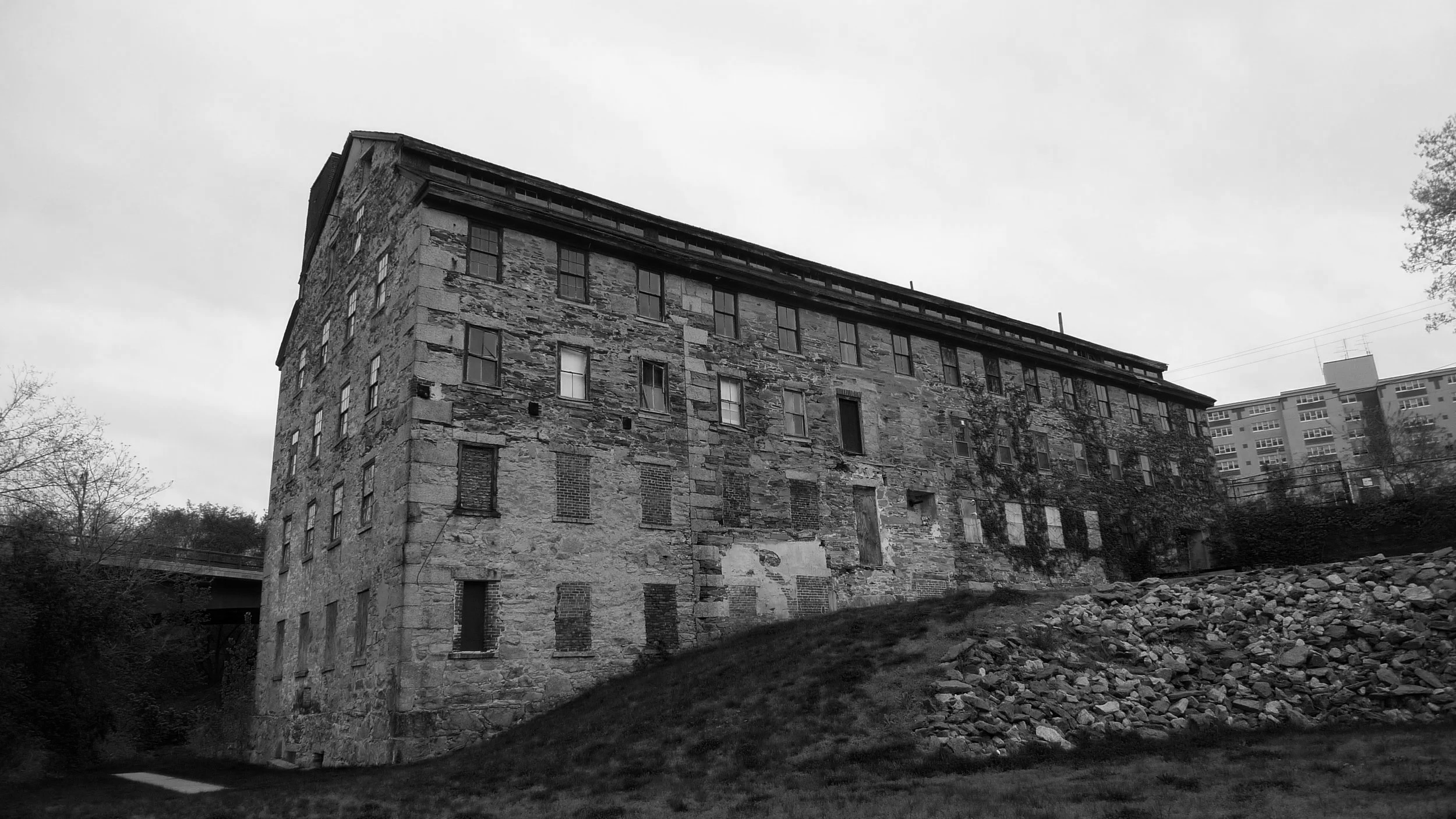
Framing flooding not as a disaster but as a seasonal pulse, the site adapts to the river’s changing edge.
Situated within a vulnerable industrial corridor, the mill is neither erased nor walled off.
Instead, the design cultivates a living landscape where hard barriers give way to a memorial forest.
Here, ecological processes and human rituals intertwine—transforming environmental risk into a collective system of resilience.

Architecture as an Index of Time
Employing alkaline hydrolysis—a water-based cremation process—remains are returned to the earth to nourish new growth.
As the forest matures, root systems densify to mitigate water ingress, while the existing mill serves as an armature for this transition.
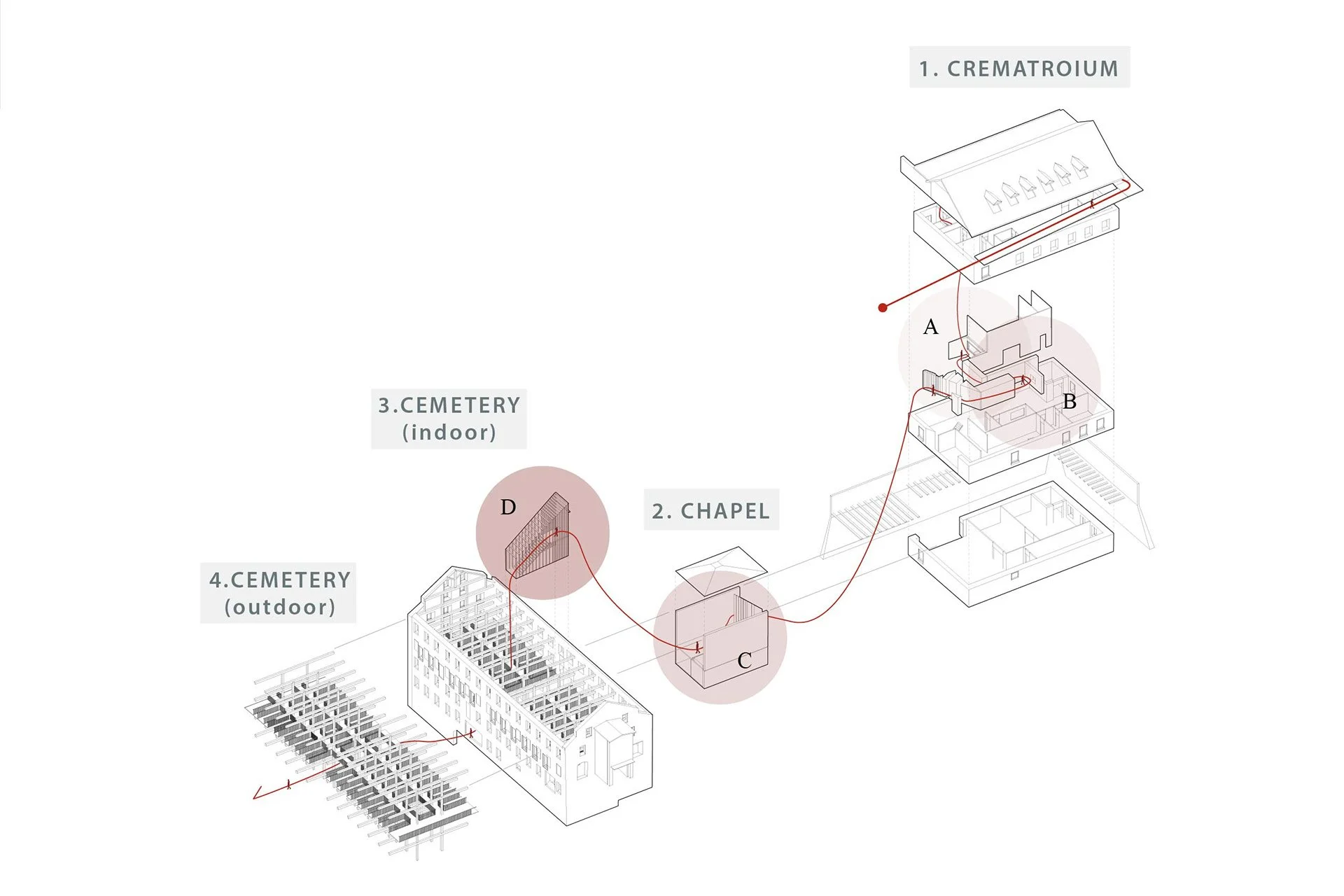
The architecture operates as a temporal system, hosting a procession from crematorium to open burial ground, translating climate data into an embodied ritual of renewal.
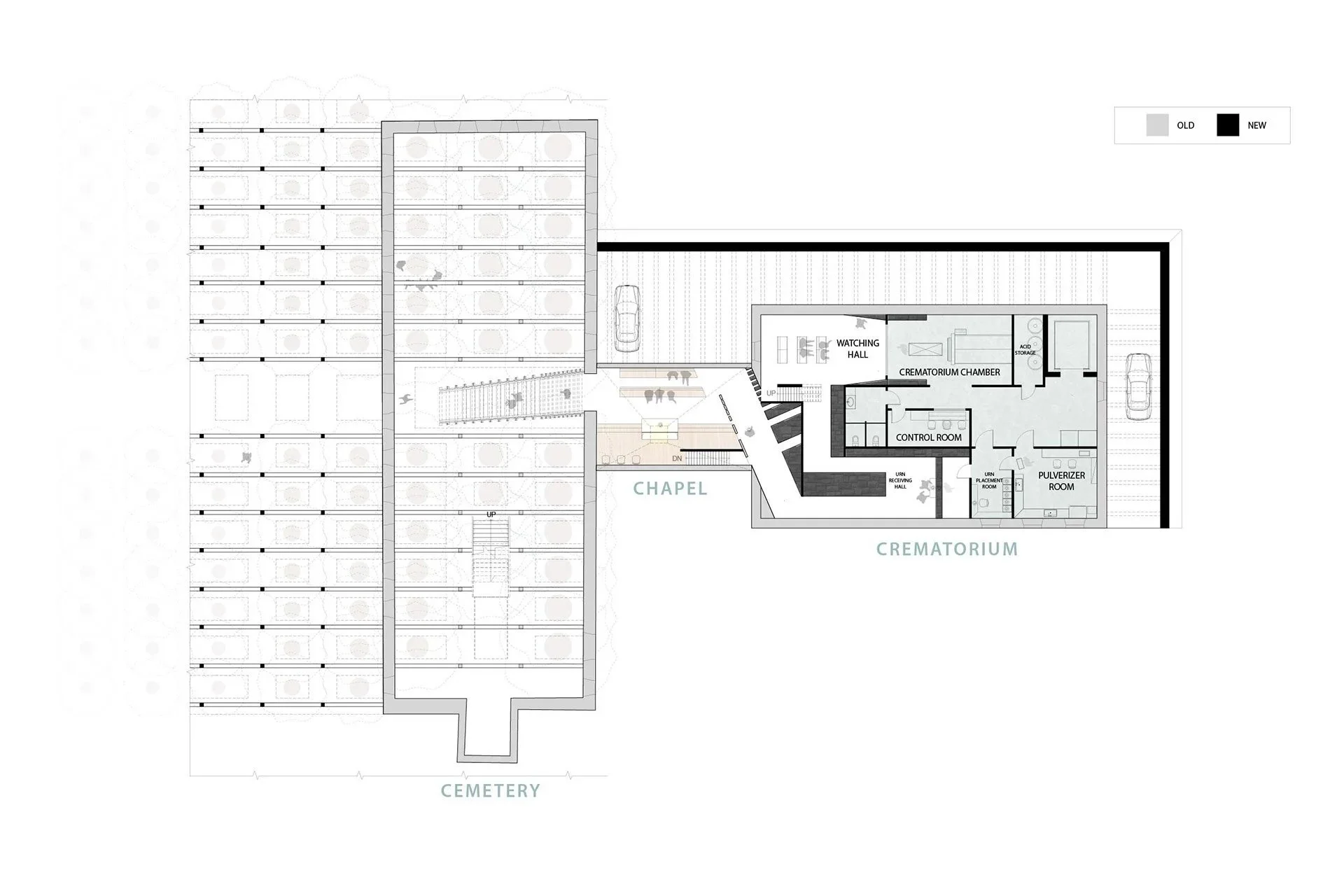
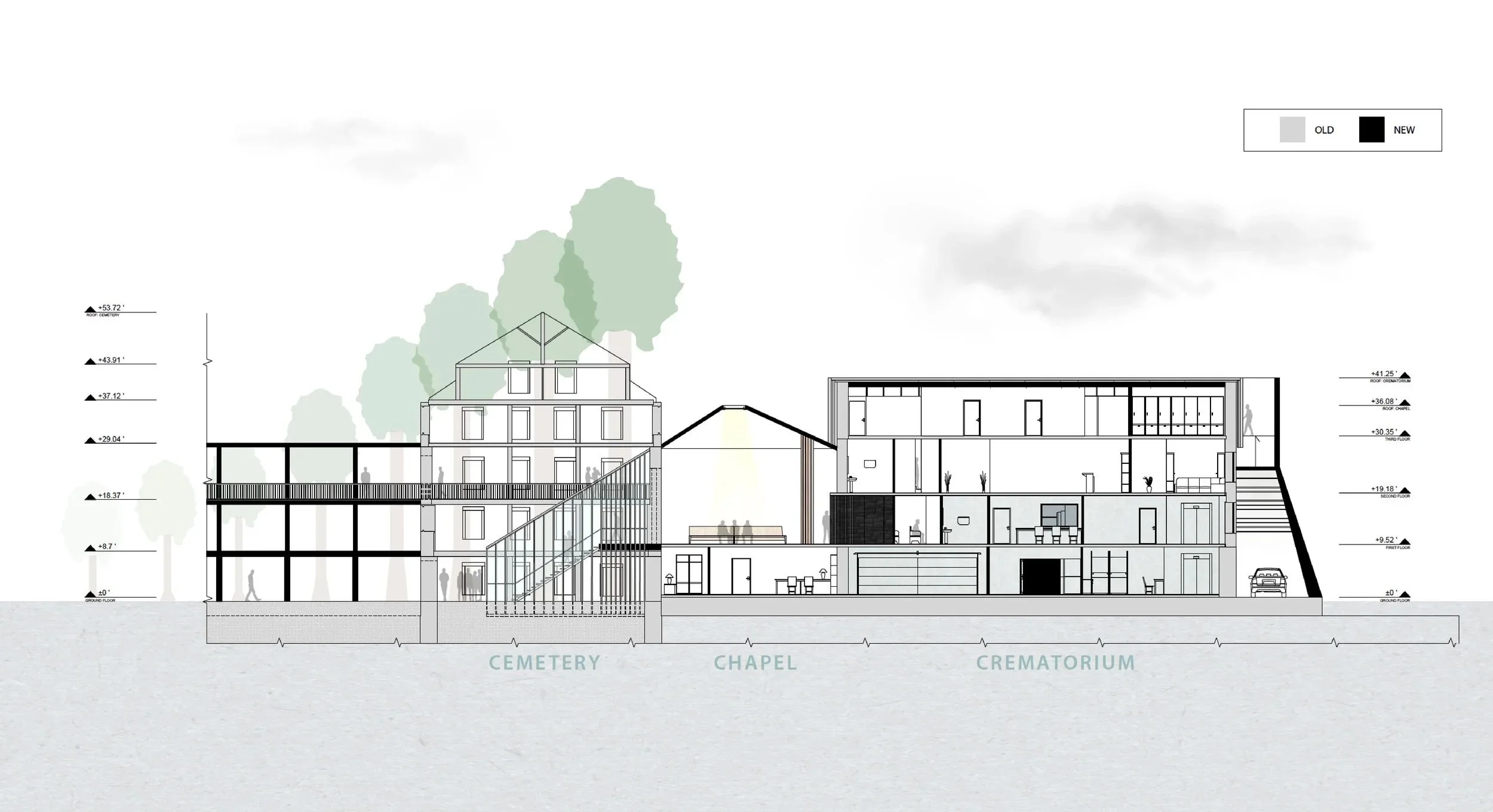
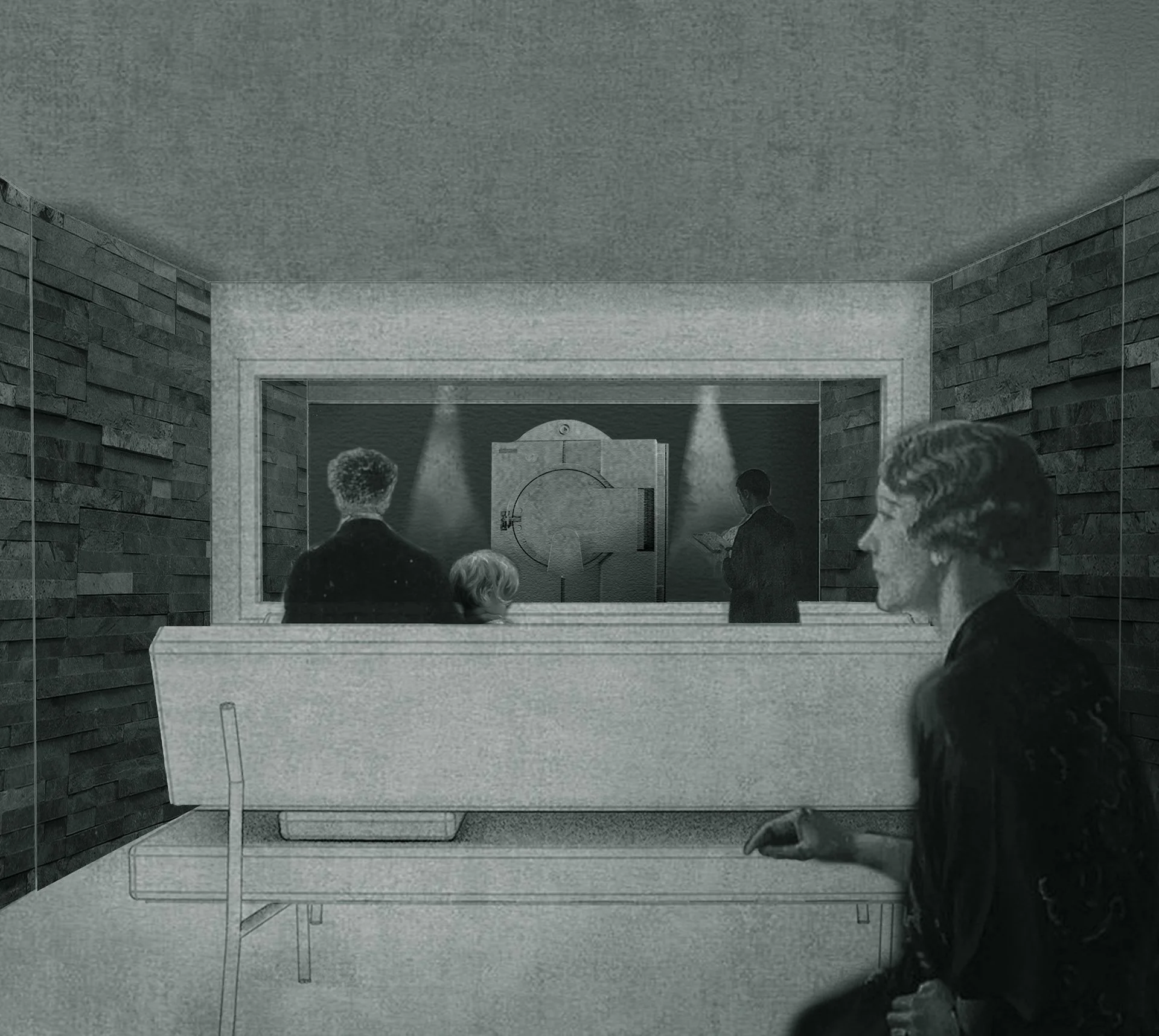
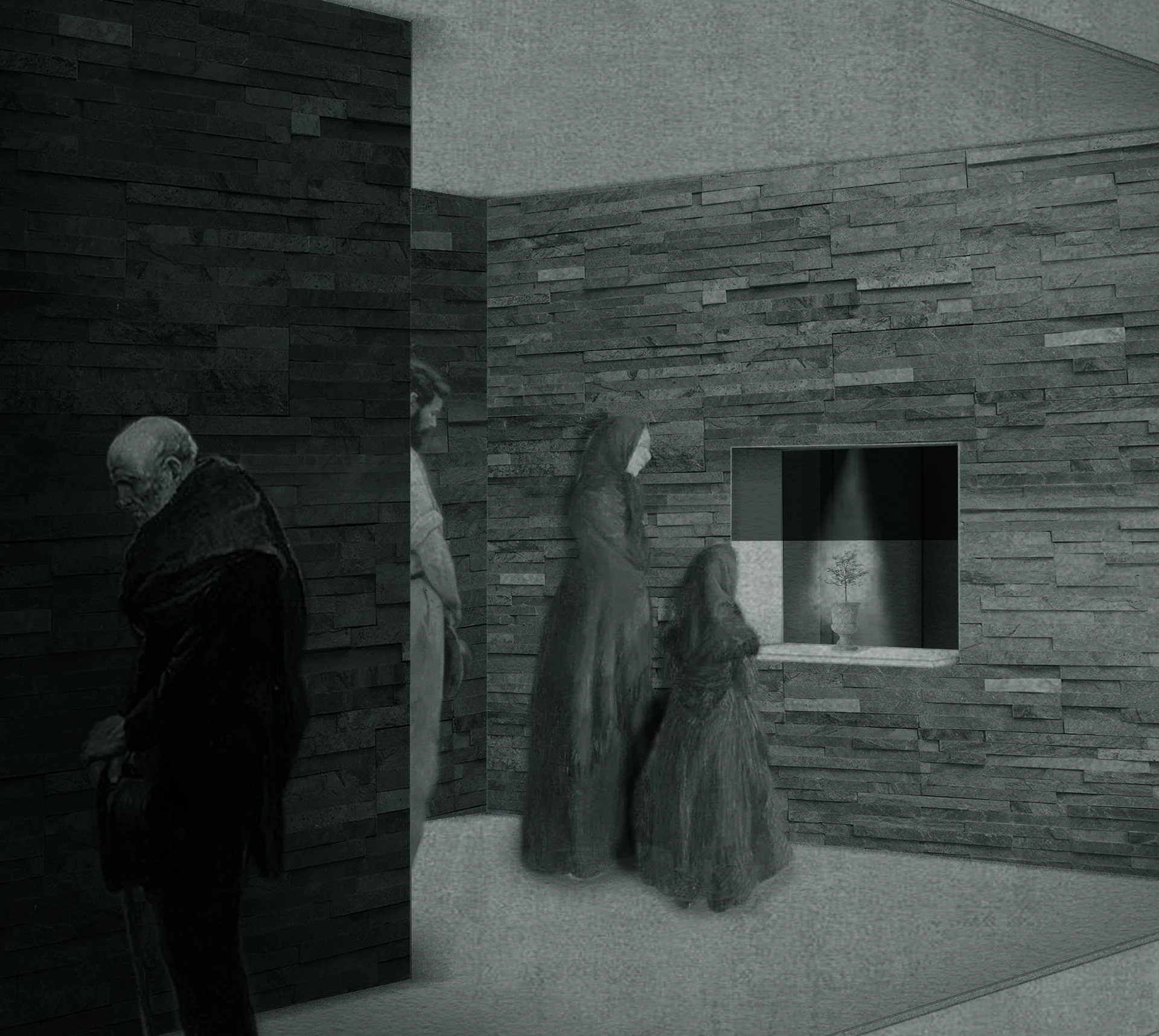
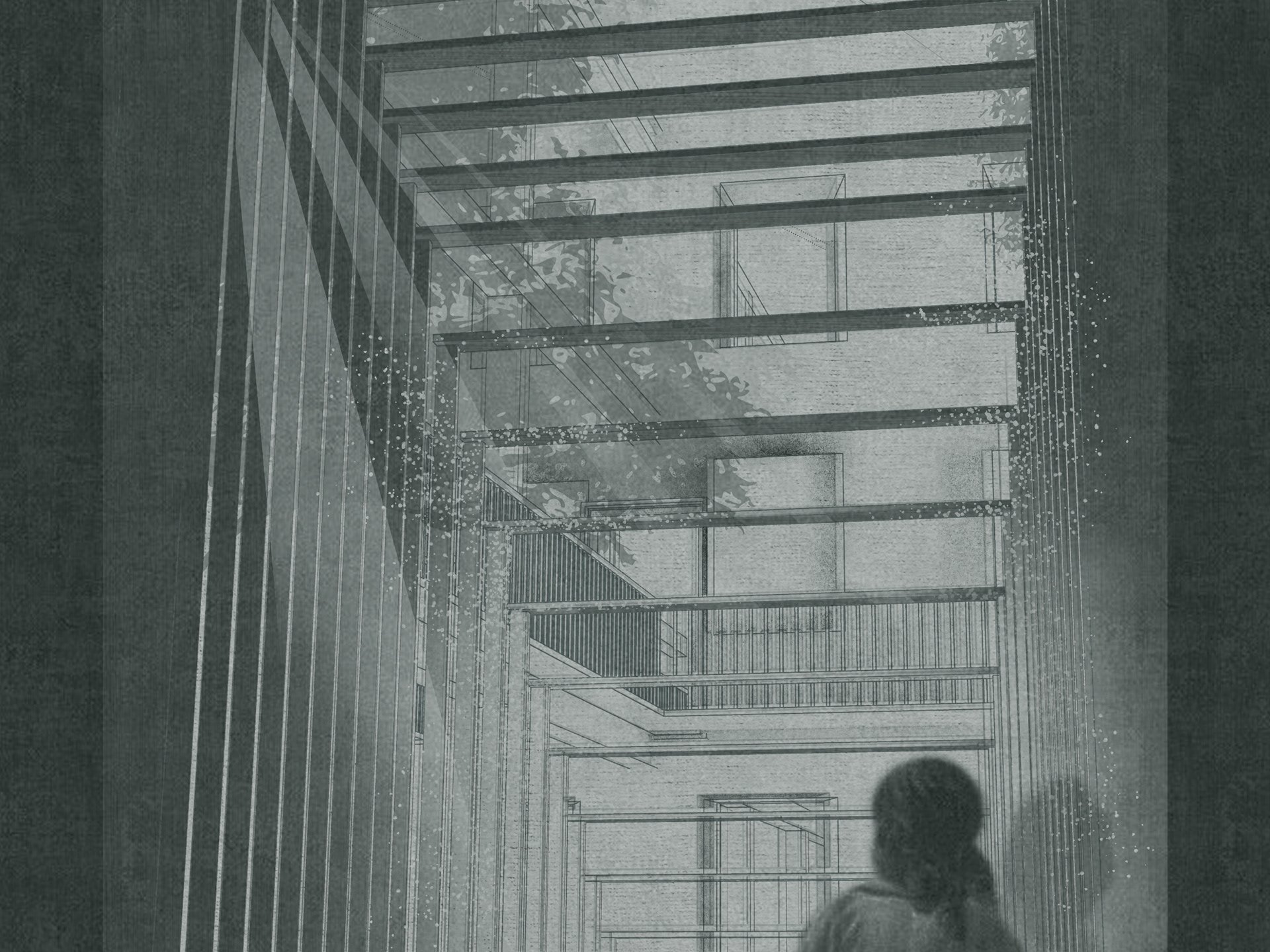
A quiet procession where water, light, and time turn farewell into regeneration.