AGORA, RHODE ISLAND
Interior Architecture
Adaptive Reuse
2019
Cranston, RI
Political Forum
40,000 SF
Location
Building Type
Building Area
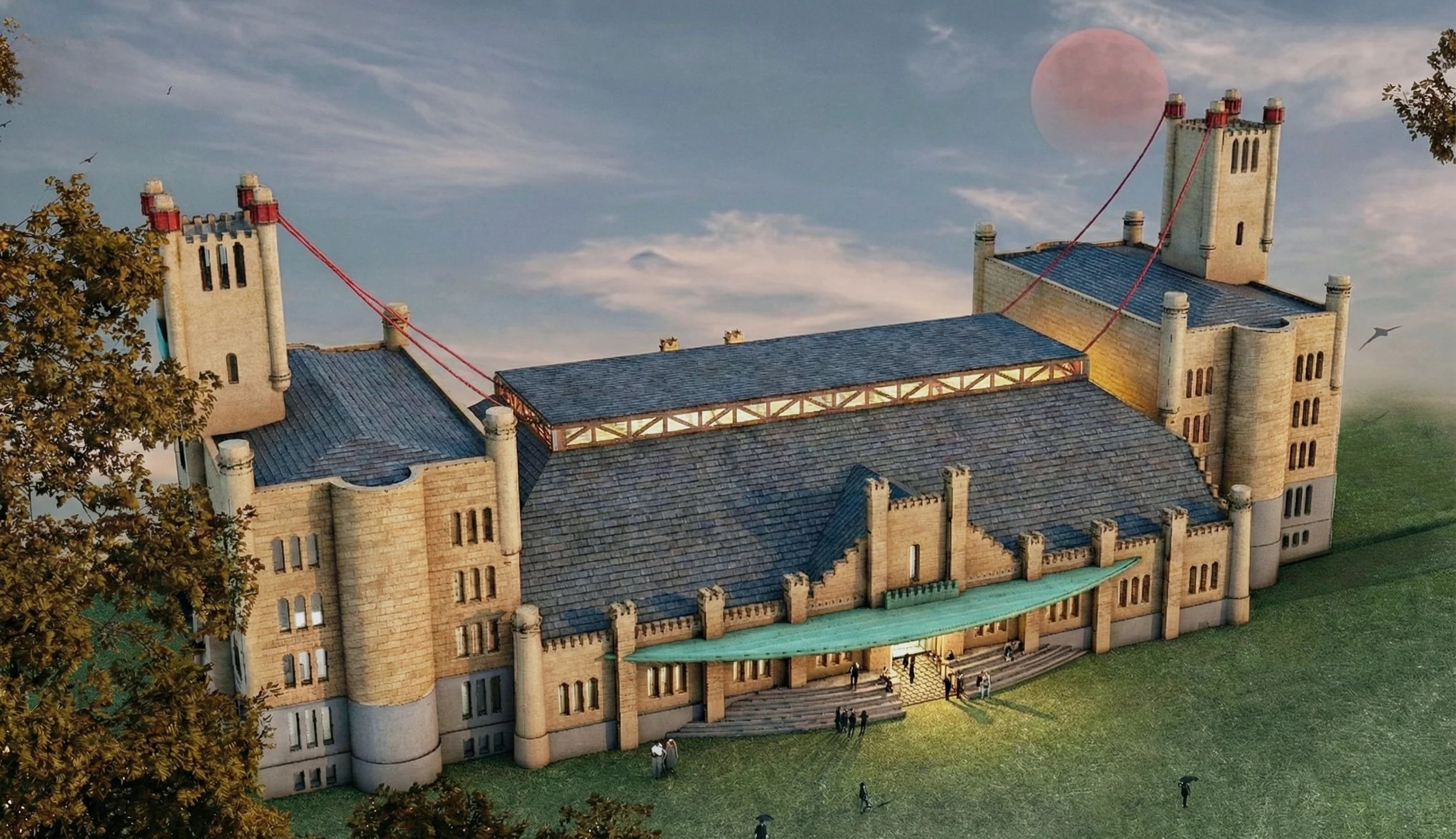
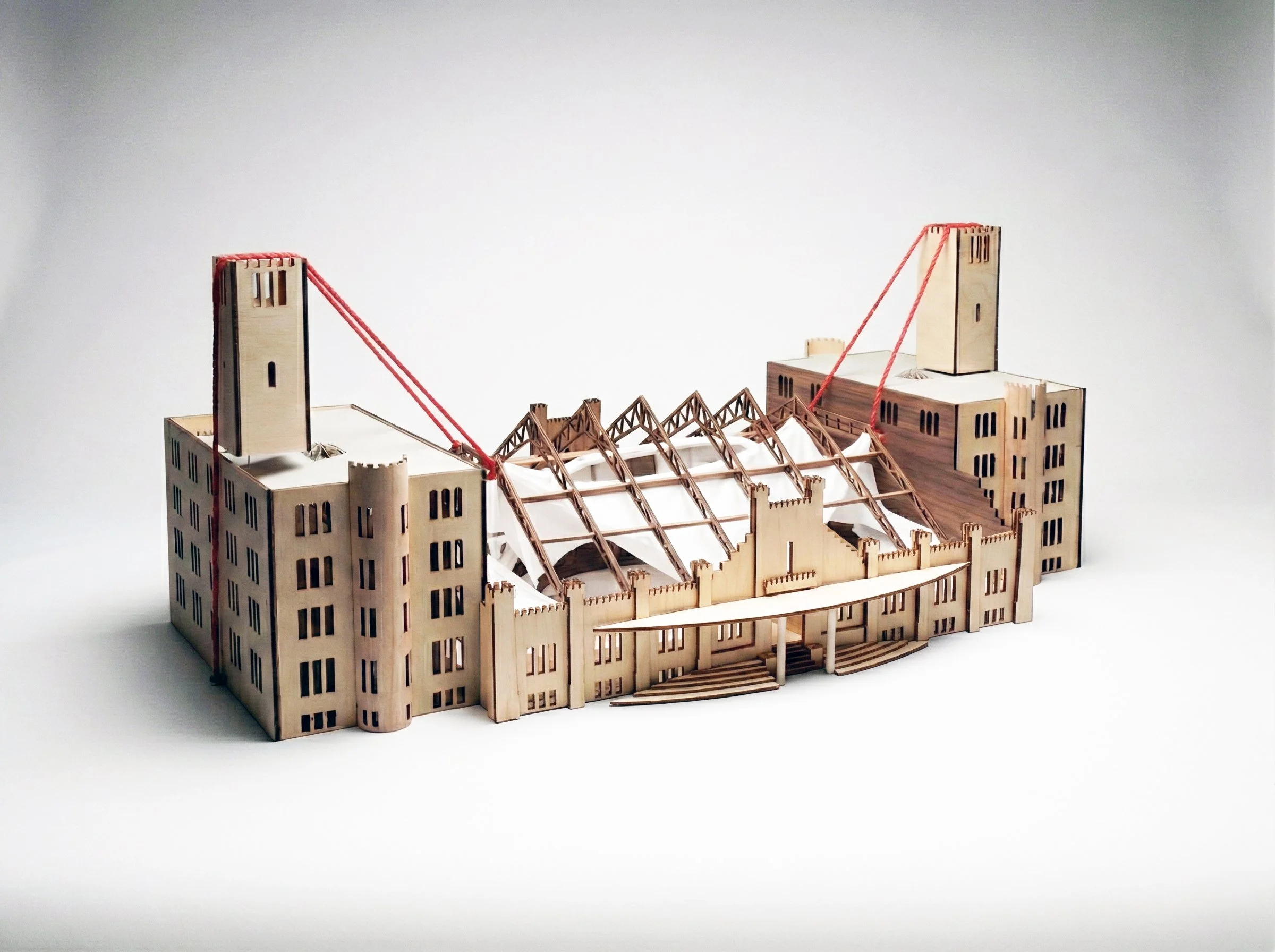
Reclaiming the Cranston Street Armory, the project transforms a fortress of authority into a vessel for public discourse. Rather than preserving the armory as a static monument, the intervention activates a civic interior that solicits participation across difference. By repositioning the drill hall as a contemporary Agora, the design turns a legacy of control into a stage for democratic visibility.
Agora as Contemporary Civic Space
Sited within a neighborhood defined by social plurality, the project intervenes in a structure long associated with military authority.
As the armory’s original function fades, the proposal reclaims the vast drill hall as a contemporary Agora.
Architecture here operates not as an instrument of discipline, but as a framework for democratic assembly—mediating between the scale of the individual and the collective.
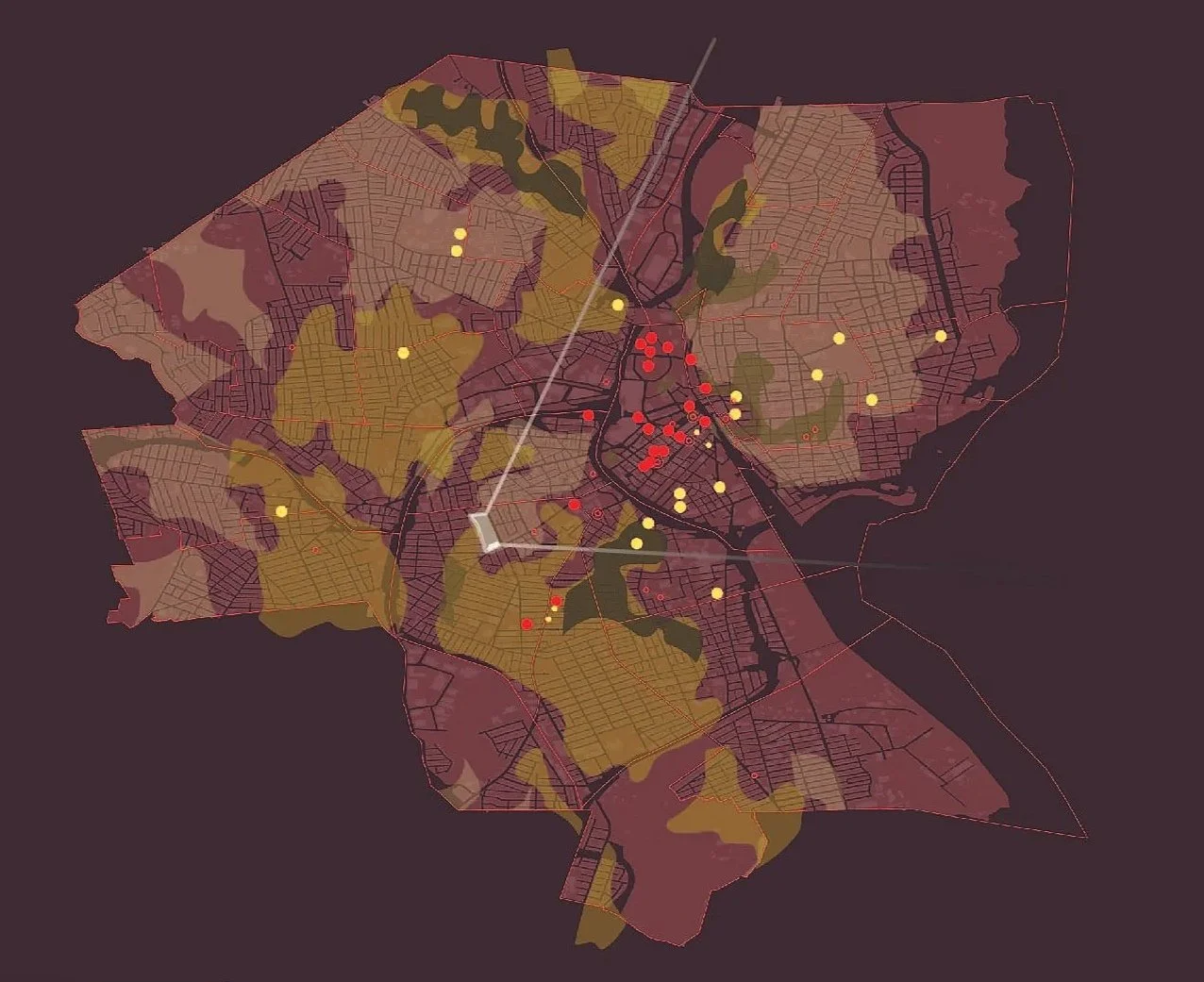
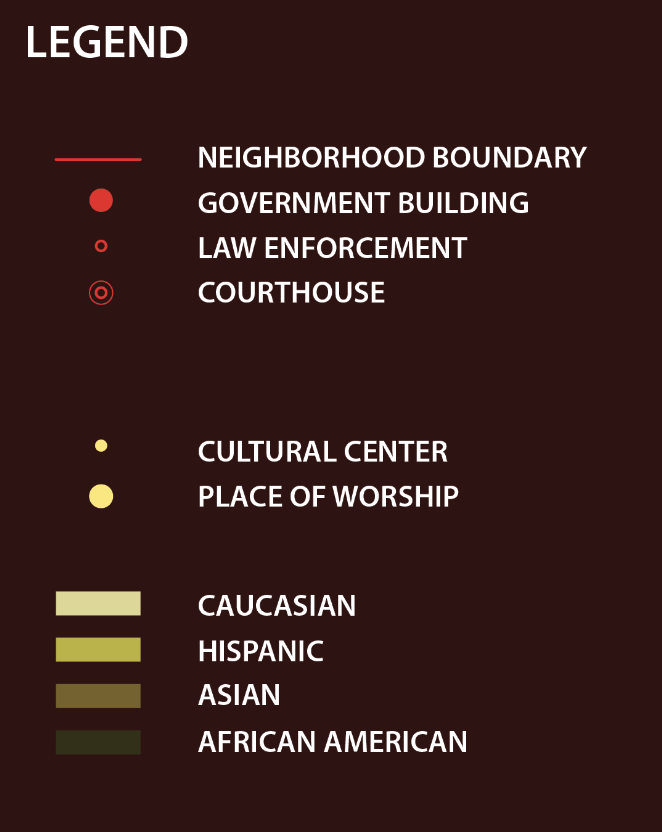
↑ Context mapping
Visualizing the tension between the military structure and the diverse neighborhood context.
Interior as Political Infrastructure
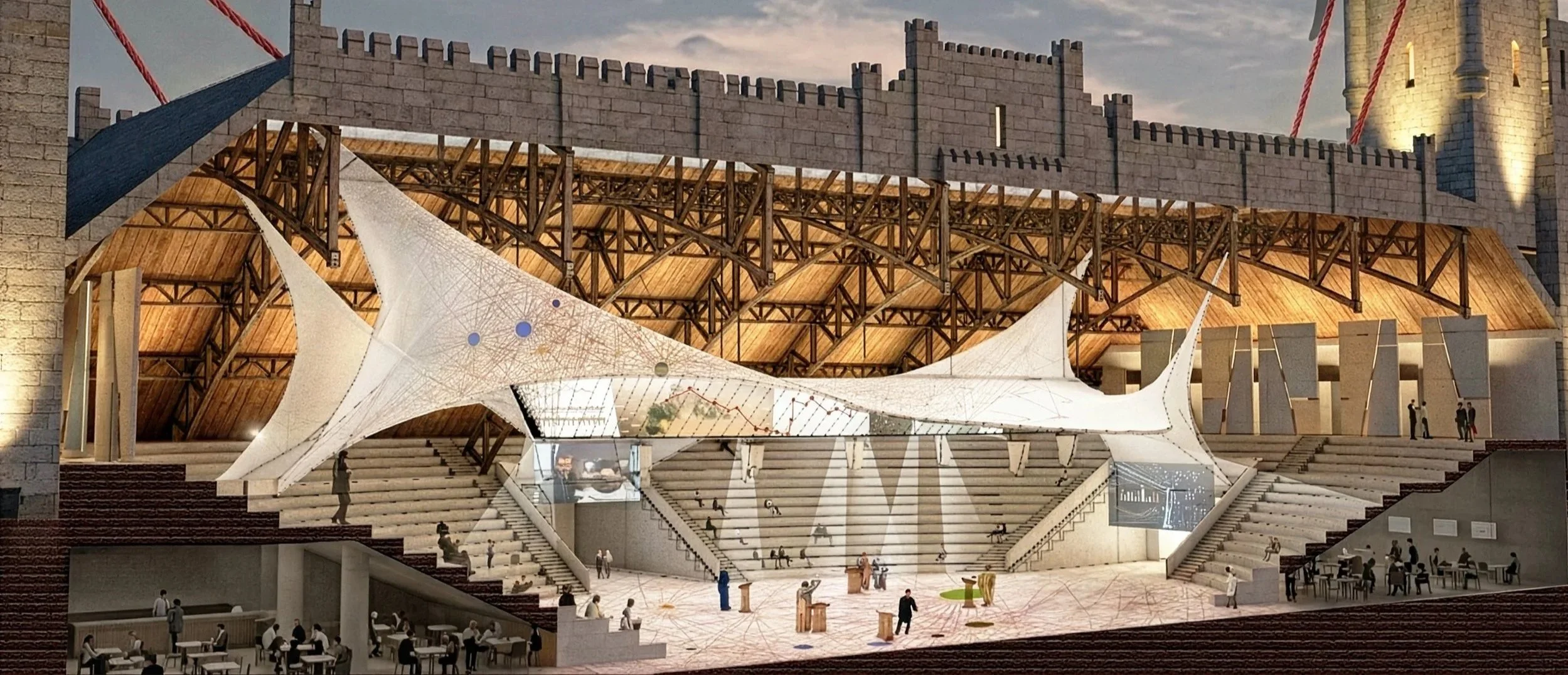
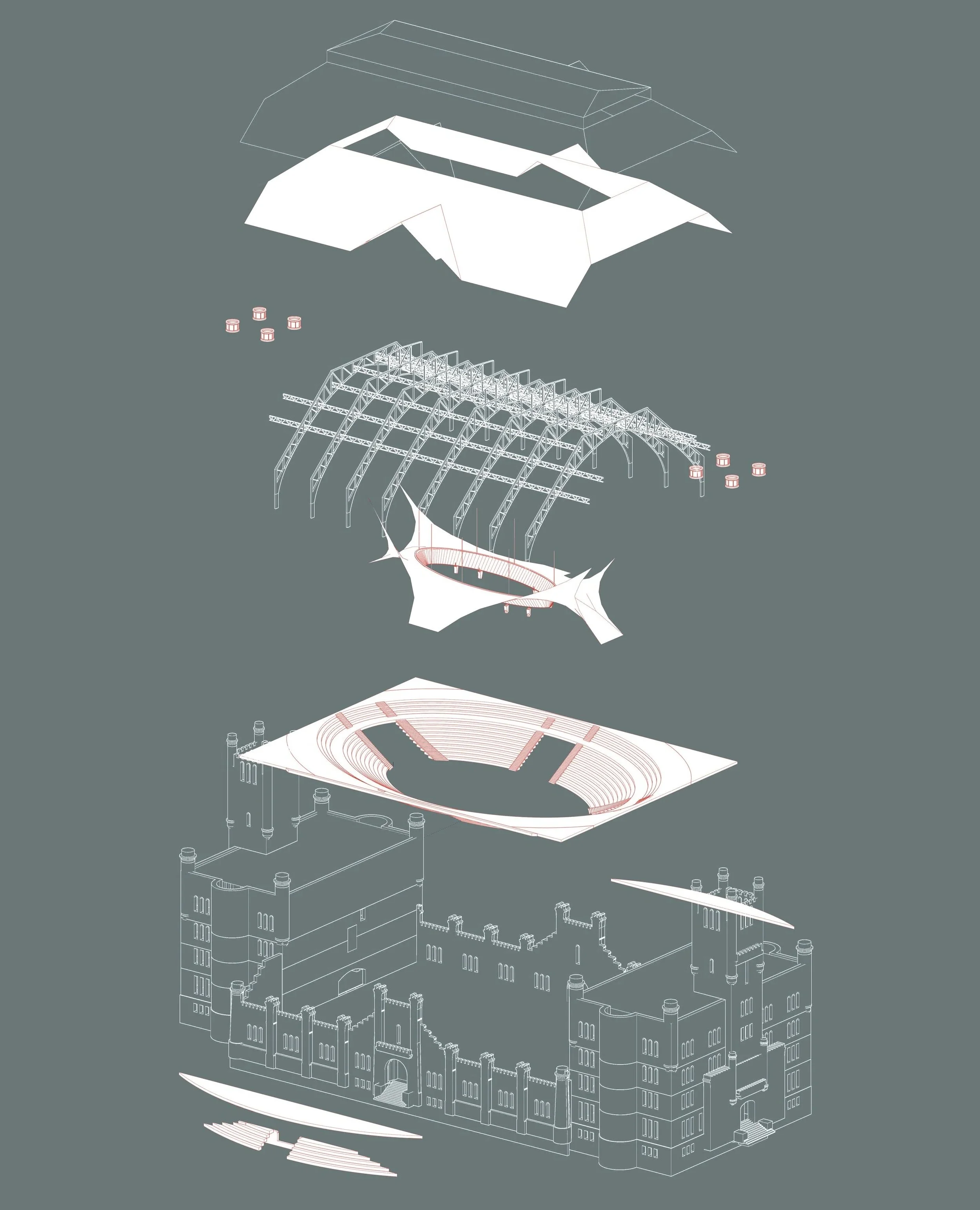
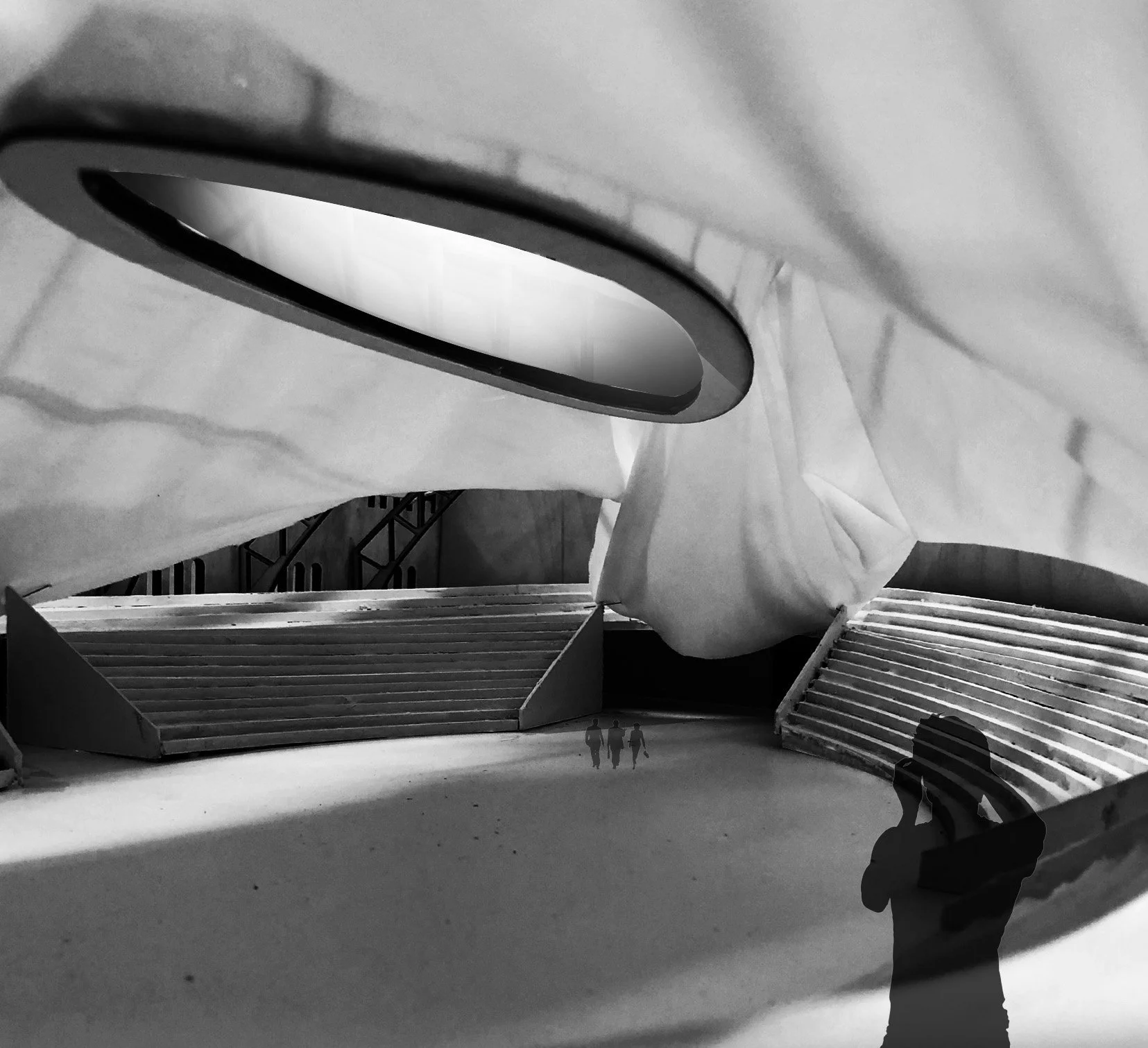
Treating space as political infrastructure, a continuous canopy redefines the drill hall both acoustically and visually.
Acting simultaneously as a ceiling and projection interface, this surface supports real-time data and speech without fragmenting the collective scale.
The canopy amplifies discourse through architectural form, structuring how voices are registered within the volume.
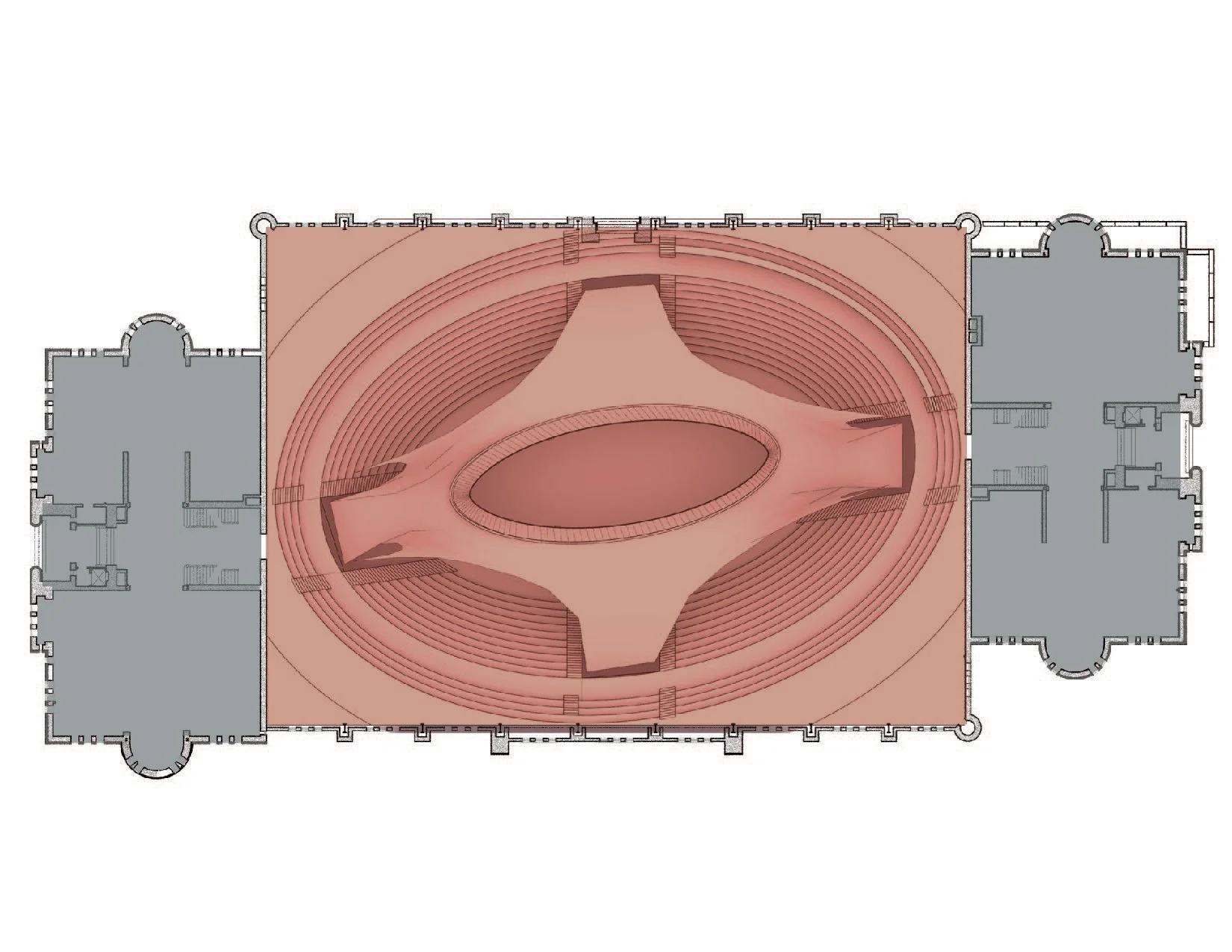
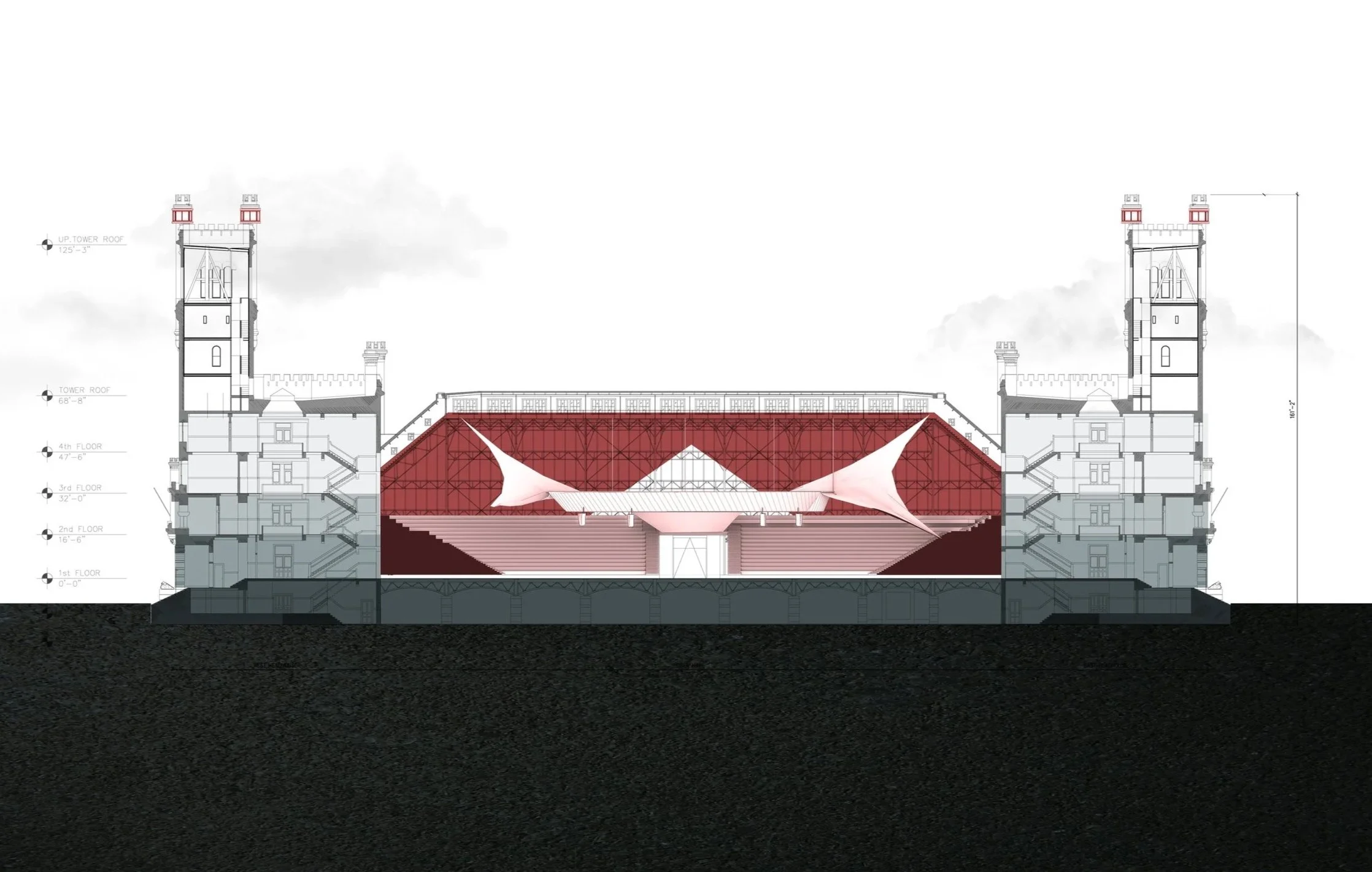
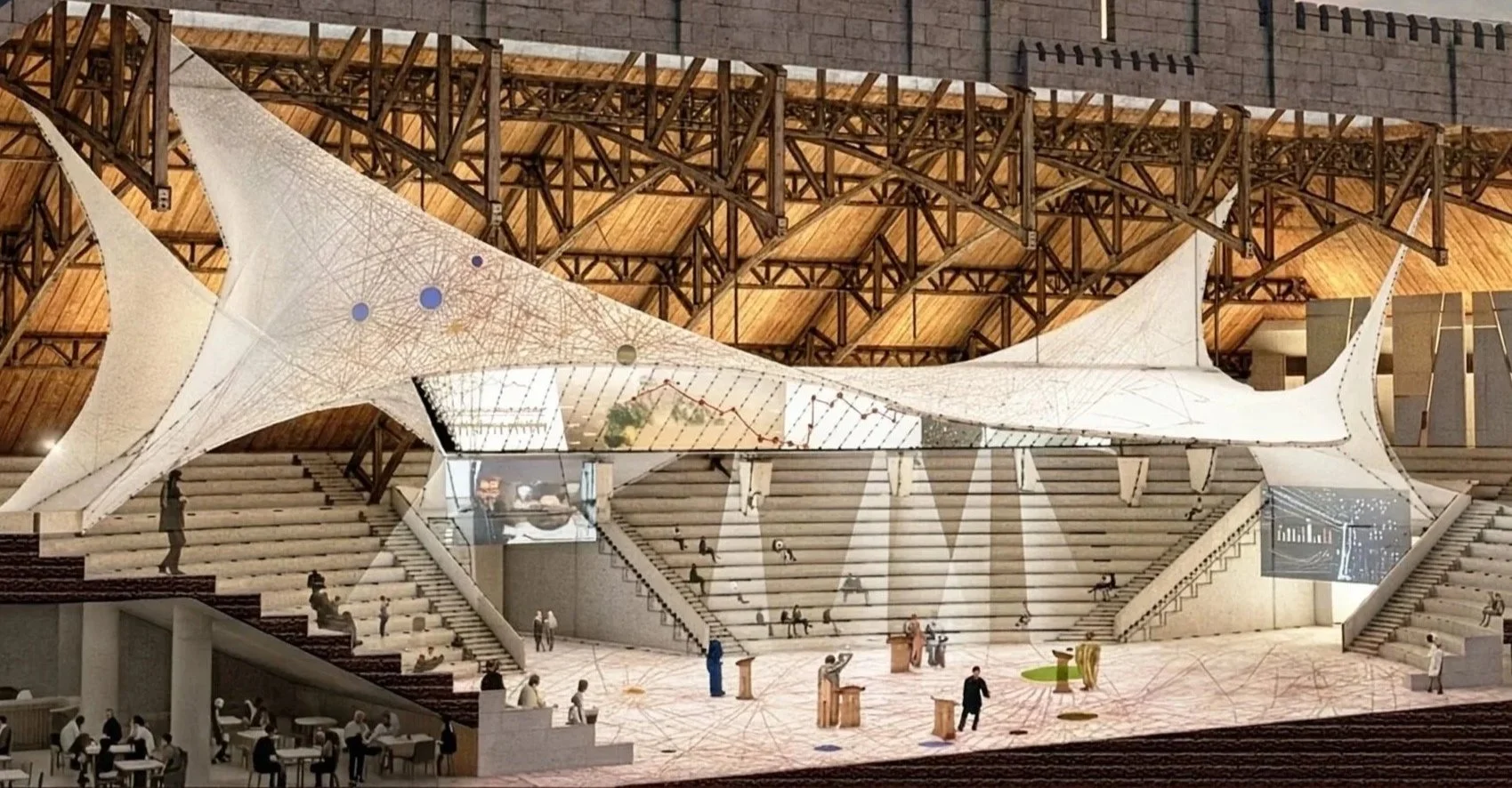

↑ Individual input translated into spatial presence through real-time projection.
Participation, Media, and Real-Time Feedback
Bridging the gap between speaker and audience, the forum integrates digital participation into the spatial experience.
Live polling and social feeds are translated into visual information, projected instantly across the canopy.
By turning individual opinion into spatial presence, the architecture mediates between physical gathering and networked public voice, making debate both spoken and seen.
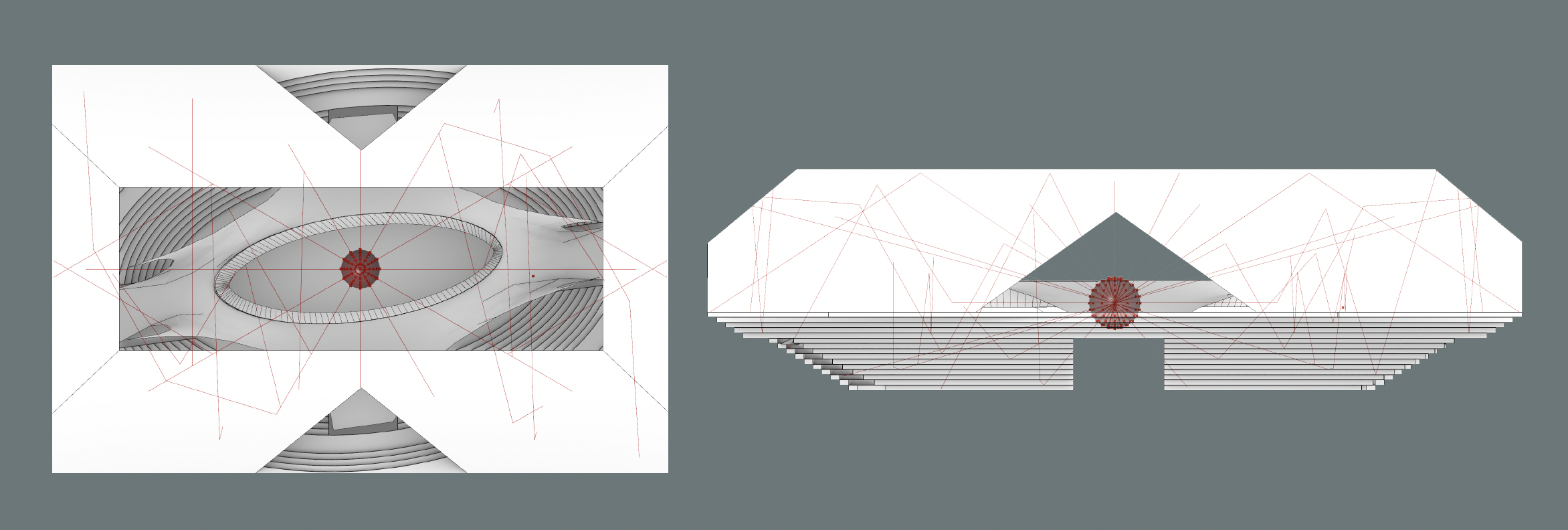
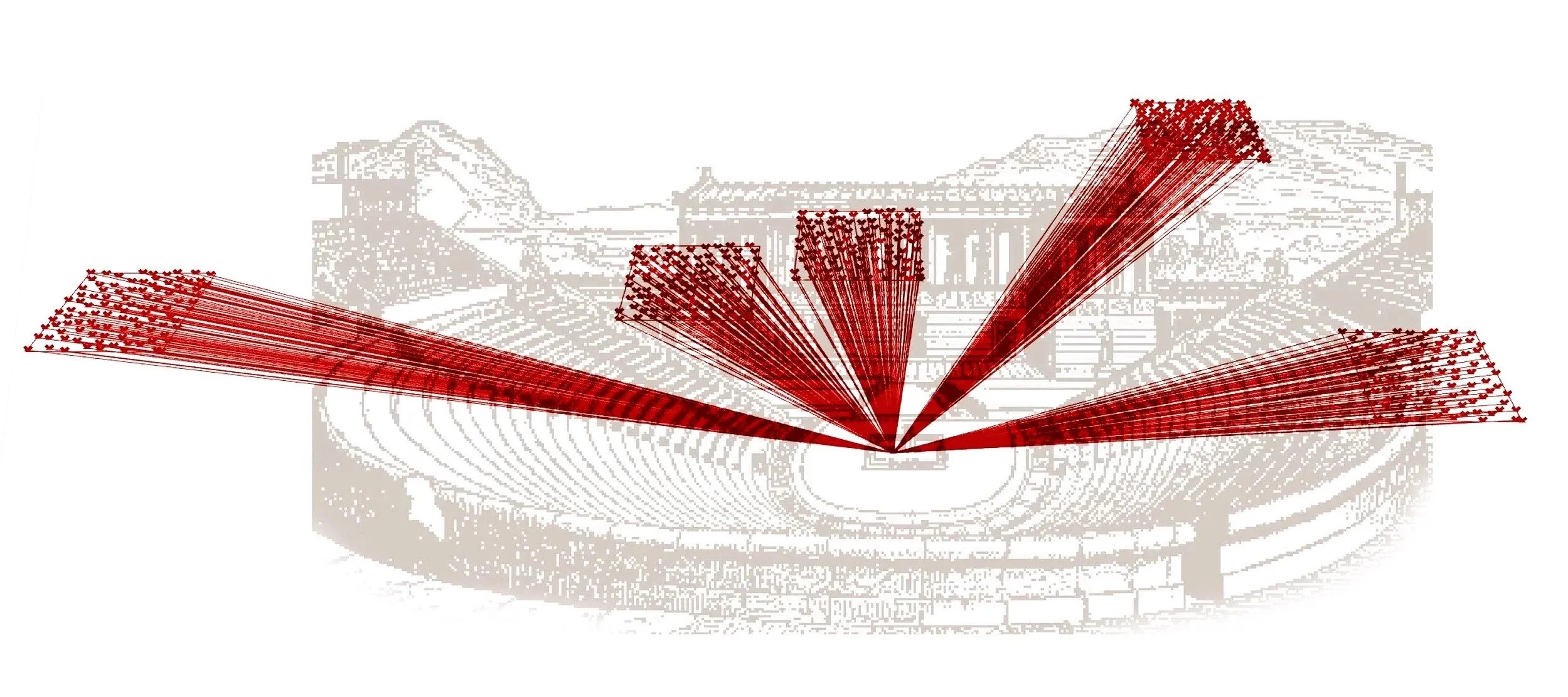
↑ Auralization simulations optimize the canopy to evenly distribute speech across the drill hall.
Acoustic Strategy: Making Speech Legible
The design aligns sonic clarity with civic function.
Auralization studies were used to optimize the canopy’s geometry and material system.
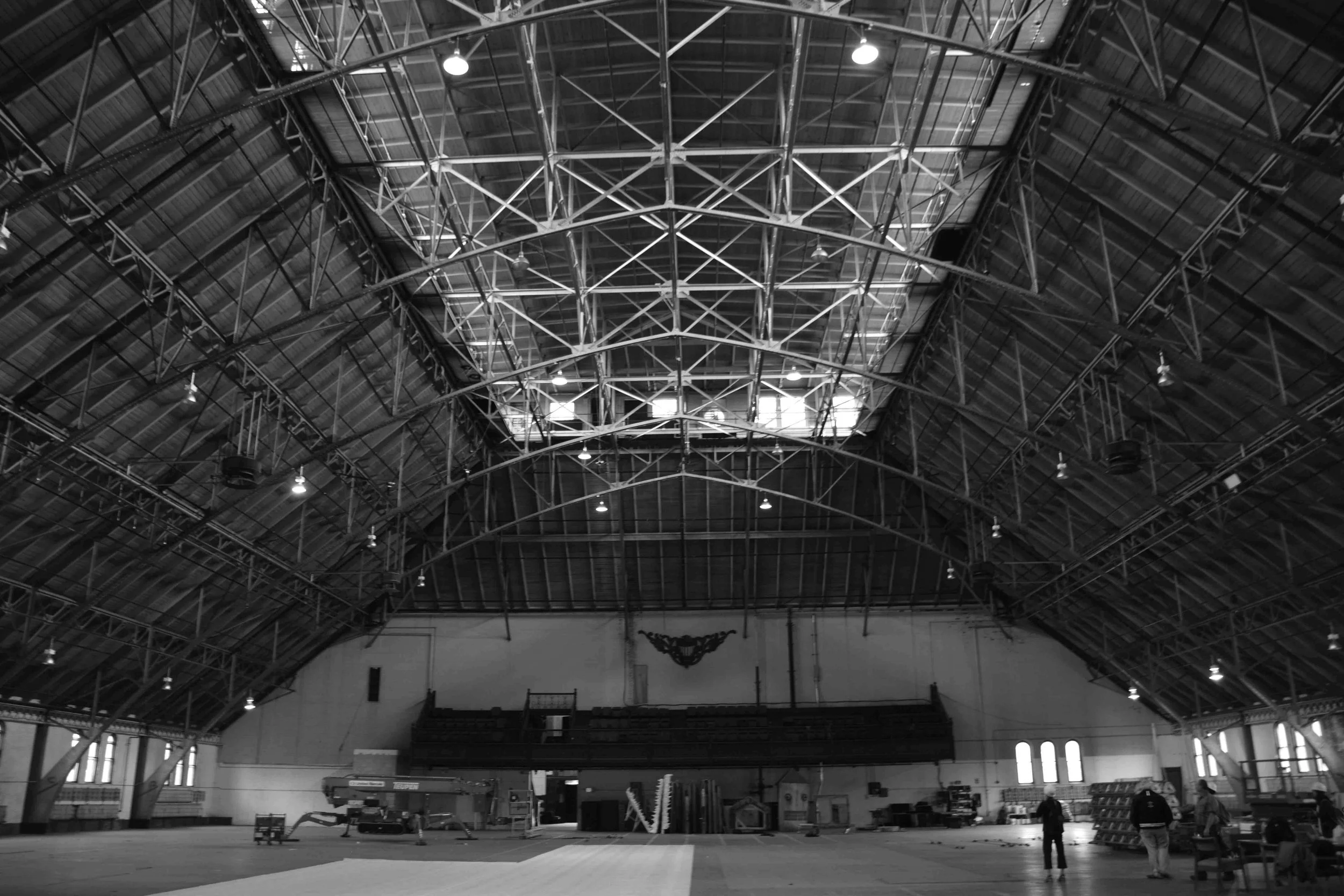
The intervention reduces reverberation time from 4.6 to 1.9 seconds—within the optimal range for reinforced speech.
This ensures that the cavernous hall becomes a legible, viable space for public debate.
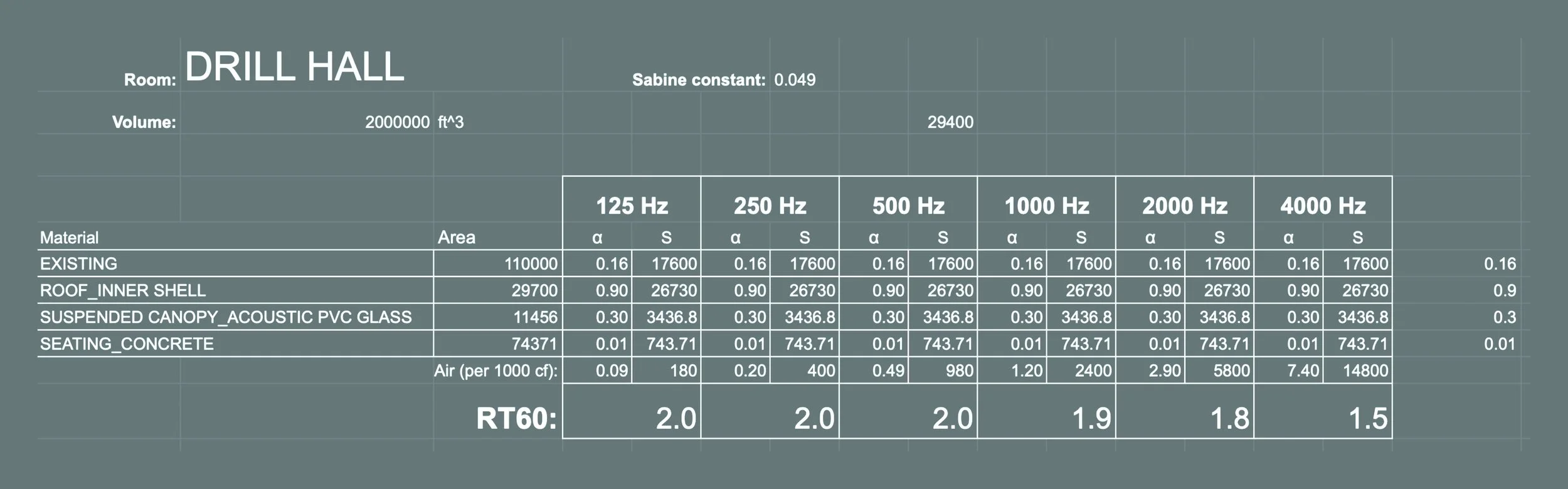
↑ Acoustic canopy material system reduced drill hall reverberation from 4.6s to 1.9s.
Transforming the armory into a civic stage, the project frames dissent not as division, but as the visible substance of democracy.